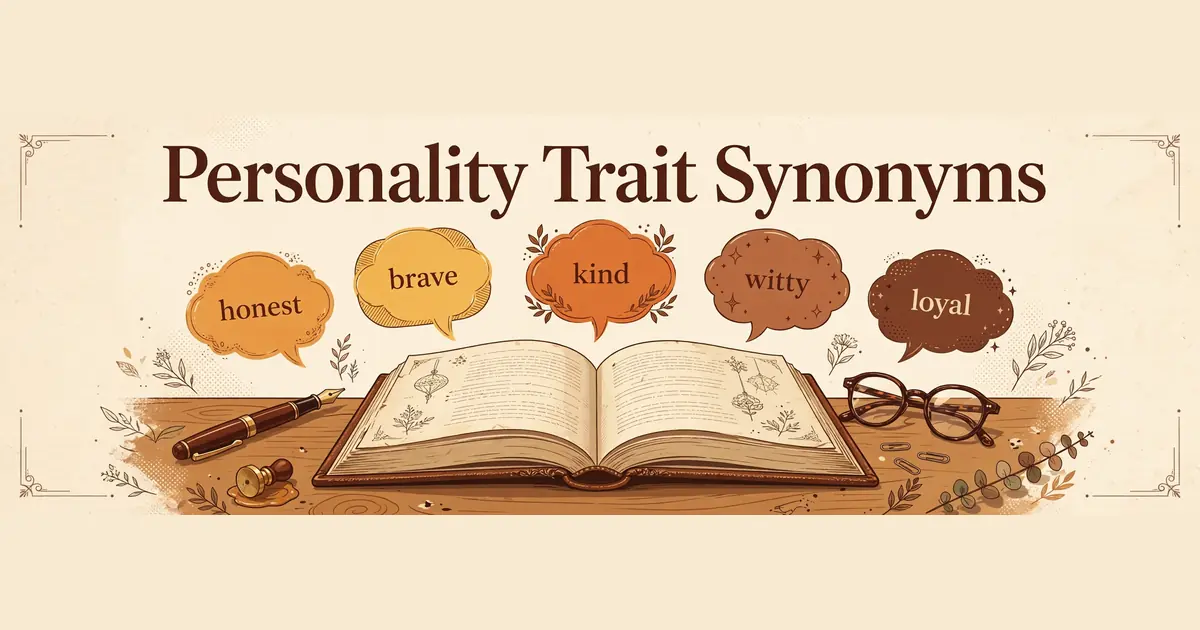
Personality trait synonyms are words that describe character — who someone is on the inside, not how they look. Common examples are loyal /ˈlɔɪəl/ , generous /ˈd͡ʒɛn(ə)ɹəs/ , patient, and brave. These words show kindness, courage, honesty, and temperament, so you can describe any person exactly.
Two friends wait at a hospital desk late at night. One jokes gently with the nurse to calm everyone’s nerves; the other stands quietly, holding the family’s bags, saying nothing at all. Same kindness — two completely different personalities.
That is why one small word like “nice” never tells the whole story of a person.
Think of describing a new teacher on the first day of term. Call her “strict” and the class worries; call her “firm but fair” and everyone relaxes. The trait word you choose changes how people feel before she even speaks.
For students, trait words make character essays specific instead of vague. For bloggers and storytellers, they build characters readers actually believe in. Content writers use them in profiles, reviews, and recommendation letters. For daily English users, they help you praise, warn about, or describe anyone — a friend, a boss, a roommate — in one exact word. For feelings rather than character, see our emotion synonyms guide.
“Character is what you are in the dark.”
Words like nice, good, and bad get used so often that they say almost nothing about a person. Was she nice — or compassionate /kəmˈpæʃənət/ , loyal, or quietly witty /ˈwɪti/ ? Each trait word below adds one precise fact about someone’s character, so your description finally matches the person you mean.
“The true test of a man’s character is what he does when no one is watching.”
Below, you will find 83 clear personality trait synonyms, each with a simple meaning and two easy examples.
Main Content: 83 Personality Trait Synonyms
1. Compassionate /kəmˈpæʃənət/
- Meaning: feels others’ pain and wants to help.
- Examples: The compassionate nurse stayed late to comfort the patient. A compassionate teacher notices when a student is struggling.
2. Considerate /kənˈsɪdəɹət/
- Meaning: thinks about how actions affect others.
- Examples: It was considerate of him to offer his seat. She is considerate enough to call before visiting.
3. Courteous /ˈkɝti.əs/
- Meaning: polite in a graceful, respectful way (formal).
- Examples: The courteous waiter refilled our glasses twice. He gave a courteous reply even when annoyed.
4. Empathetic /ˌempəˈθetɪk/
- Meaning: understands what others feel.
- Examples: An empathetic teacher notices when students struggle. Her empathetic listening made him open up.
5. Generous /ˈd͡ʒɛn(ə)ɹəs/
- Meaning: gives freely: time, praise, help.
- Examples: She made a generous donation to the food bank. He is generous with credit and shares every success.
6. Gentle /ˈd͡ʒɛn.tl̩/
- Meaning: soft and kind in manner.
- Examples: He has a gentle way with nervous animals. Her gentle voice calmed the crying child.
7. Humble /ˈhʌmbəl/
- Meaning: does not brag; modest about success.
- Examples: Despite his fame, he stayed humble and kind. The humble champion thanked her whole team.
8. Kind /kaɪnd/
- Meaning: the simple, strongest one: caring and good.
- Examples: It was kind of you to help me move. A kind word costs nothing but means everything.
9. Loyal /ˈlɔɪəl/
- Meaning: stands by people through hard times.
- Examples: They have been loyal friends for twenty years. A loyal dog waits by the door every evening.
10. Patient /ˈpeɪ̯ʃənt/
- Meaning: stays calm when things take long.
- Examples: A patient teacher explains things as many times as needed. He stayed patient through the long delay.
11. Sincere /sɪnˈsɪɹ/
- Meaning: honest in feelings; means what they say.
- Examples: Please accept my sincere thanks for your help. Her sincere apology repaired the friendship.
12. Thoughtful /ˈθoːtfəl/
- Meaning: remembers small things that matter to others.
- Examples: She sent a thoughtful card on my birthday. It was thoughtful of him to bring her favorite tea.
13. Warm /wɔɹm/
- Meaning: friendly in a way that puts people at ease.
- Examples: Our warm host made everyone feel welcome. She has a warm smile for every guest.
14. Cheerful /ˈt͡ʃɪɹfl̩/
- Meaning: happy and positive in mood.
- Examples: Her cheerful greeting brightened the office. He stays cheerful even on difficult days.
15. Charismatic /ˌkɛɹəzˈmætək/
- Meaning: naturally attracts and inspires people.
- Examples: The charismatic speaker held the crowd’s attention for an hour. A charismatic leader makes people want to follow.
16. Punctual /ˈpʌŋkt͡ʃuəl/
- Meaning: always on time; respects others’ schedules.
- Examples: He is always punctual, never a minute late. Punctual students rarely miss instructions.
17. Tolerant /ˈtɑːləɹənt/
- Meaning: accepts differences without judgment.
- Examples: A tolerant manager listens to every viewpoint. She is tolerant of other people’s habits.
18. Astute /əsˈtjuːt/
- Meaning: quick to understand tricky situations.
- Examples: Her astute analysis saved the company millions. An astute reader spots the flaw in the argument.
19. Bright /ˈbɹaɪ̯t/
- Meaning: smart and quick to learn.
- Examples: She is one of the brightest students in class. The bright child solved the puzzle in minutes.
20. Clever /ˈklɛv.ɚ/
- Meaning: smart in a practical, creative way.
- Examples: The clever fox escaped the trap twice. He found a clever way to fix the leak.
21. Diligent /ˈdɪlɪdʒənt/
- Meaning: works with steady, careful effort (formal).
- Examples: Her diligent research impressed the professor. A diligent worker double-checks every figure.
22. Inventive /ɪnˈvɛntɪv/
- Meaning: good at finding new ideas and fixes.
- Examples: The inventive engineer built a robot from scrap. She is inventive in the kitchen, too.
23. Knowledgeable /ˈnɑ.lɪ.d͡ʒə.bəl/
- Meaning: knows a lot about a subject.
- Examples: Ask him; he is knowledgeable about cars. The knowledgeable guide answered every question.
24. Master /ˈmɑstə/
- Meaning: used as a trait noun: someone with complete skill.
- Examples: She is a true master of French cooking. He became a master of his craft after decades. More at synonyms of master.
25. Resourceful
- Meaning: finds a way even with little to work with.
- Examples: The resourceful campers built a shelter from branches. A resourceful cook can improvise any recipe.
26. Wise /waɪz/
- Meaning: makes good judgments from experience.
- Examples: My wise grandmother always gave good advice. A wise manager listens before deciding.
27. Ambitious /æmˈbɪʃ.əs/
- Meaning: wants to achieve big things.
- Examples: The ambitious graduate applied to five top firms. She is ambitious and plans every step.
28. Brave /bɹeɪv/
- Meaning: acts even when afraid.
- Examples: The brave firefighter entered the burning house. It was brave of her to admit the mistake.
29. Confident /ˈkɑnfɪdənt/
- Meaning: trusts their own ability.
- Examples: She gave a confident presentation to the board. A confident speaker looks at the audience.
30. Courageous /kəˈɹæɪd͡ʒəs/
- Meaning: brave over time, not just once.
- Examples: It was courageous to speak up in that meeting. The courageous nurse worked through the whole crisis.
31. Decisive /dɪˈsɪsɪv/
- Meaning: makes choices quickly and sticks to them.
- Examples: A decisive leader makes calls without endless delay. She is decisive even under pressure.
32. Determined /dɪˈtɝmɪnd/
- Meaning: refuses to quit.
- Examples: The determined runner finished despite the rain. He is determined to learn the language this year.
33. Fearless /ˈfɪɹləs/
- Meaning: shows almost no fear.
- Examples: The fearless reporter covered the war zone. A fearless climber, she chose the hardest route.
34. Optimistic /ˌɑptɪˈmɪstɪk/
- Meaning: expects good outcomes.
- Examples: He stays optimistic even in hard times. An optimistic captain steadies the whole team.
35. Persistent /pəˈsɪstənt/
- Meaning: keeps trying until it works.
- Examples: Her persistent emails finally got an answer. Persistent practice turned him into a pianist.
36. Proactive /pɹoʊˈæk.tɪv/
- Meaning: acts before problems appear.
- Examples: Proactive employees prevent problems early. She is proactive about her health checks.
37. Resilient /ɹɪˈzɪl.jənt/
- Meaning: bounces back after failure.
- Examples: Resilient children adapt to big changes. The resilient team rebuilt after the loss.
38. Arrogant /ˈaɹəɡənt/
- Meaning: believes they are better than everyone (strong negative).
- Examples: His arrogant tone annoyed the whole team. An arrogant answer shut the discussion down.
39. Biased /ˈbaɪəst/
- Meaning: unfairly favors one side (formal).
- Examples: The biased referee favored the home team. A biased report hides half the facts. Full list: synonyms of biased.
40. Bossy /ˈbɑsi/
- Meaning: always telling others what to do (informal).
- Examples: Her bossy manner upset the new volunteers. The bossy older sister ran the whole game.
41. Callous /ˈkæləs/
- Meaning: cold; unmoved by others’ suffering (formal).
- Examples: It was callous to laugh at his mistake. His callous reply shocked everyone.
42. Condescending /ˌkɑndəˈsɛndɪŋ/
- Meaning: talks down to people as if they were children (formal).
- Examples: She hates his condescending attitude. A condescending smile ended the meeting early.
43. Cruel /ˈkɹuːəl/
- Meaning: enjoys causing pain.
- Examples: It is cruel to tease someone about their looks. The cruel joke ruined her day.
44. Grumpy /ˈɡɹʌmpi/
- Meaning: easily annoyed; bad-tempered (informal).
- Examples: The grumpy neighbor complained about the noise. He is grumpy before his morning coffee.
45. Harsh /ˈhɑɹʃ/
- Meaning: rough in words or judgment.
- Examples: The harsh review upset the young author. Her harsh words left the room silent.
46. Hater /ˈheɪtɚ/
- Meaning: noun for someone who constantly criticizes (informal).
- Examples: Ignore the haters and keep creating. Every hater comment pushed her to practice more. See synonyms of hater.
47. Hostile /ˈhɑstəl/
- Meaning: openly unfriendly; aggressive in attitude.
- Examples: The hostile crowd booed the speaker. He gave her a hostile stare.
48. Jealous /ˈd͡ʒɛl.əs/
- Meaning: resents what others have.
- Examples: She felt jealous of her sister’s success. A jealous colleague spread the rumor.
49. Negative Nancy
- Meaning: a person who always expects the worst (informal idiom).
- Examples: Don’t be such a negative nancy — try it first. Our resident negative nancy predicted rain on the picnic. More: synonyms of negative nancy.
50. Obnoxious /əbˈnɔkʃəs/
- Meaning: extremely unpleasant; hard to tolerate (strong).
- Examples: His obnoxious laugh ruined the quiet dinner. The obnoxious guest dominated every conversation.
51. Rude /ɹud/
- Meaning: impolite; ignoring others’ feelings.
- Examples: It is rude to interrupt people. A rude reply ended the friendship.
52. Selfish /ˈsɛl.fɪʃ/
- Meaning: puts themselves first, always.
- Examples: It was selfish to take the last slice. A selfish player never passes the ball.
53. Snobby /ˈsnɑbi/
- Meaning: looks down on people seen as less refined (informal).
- Examples: The snobby waiter ignored our table. Her snobby remarks emptied the room.
54. Spiteful /ˈspaɪtfʊl/
- Meaning: wants to hurt others out of anger (strong).
- Examples: She sent a spiteful message after the breakup. A spiteful comment can wound for years.
55. Stingy /ˈstɪnd͡ʒi/
- Meaning: unwilling to share or spend (informal).
- Examples: He is too stingy to tip the driver. The stingy host served the smallest portions.
56. Petty /ˈpɛt.i/
- Meaning: small-minded; makes big issues out of tiny ones (informal).
- Examples: Stop being petty about who texted first. A petty argument ruined the whole evening.
57. Sarcastic /sɑɹˈkæs.tɪk/
- Meaning: uses mocking, ironic remarks — saying the opposite of what they mean, often to tease or hurt (informal).
- Examples: His sarcastic comments hurt her feelings. “Great, another meeting,” she said in a sarcastic tone.
58. Cowardly /ˈkaʊədli/
- Meaning: runs from fear; avoids brave action.
- Examples: It was cowardly to blame his friend. A cowardly excuse fooled no one.
59. Deceitful /dɪˈsiːtfʊl/
- Meaning: tricks people on purpose.
- Examples: The deceitful salesman hid the car’s damage. Her deceitful smile hid the plan.
60. Dishonest /dɪˈsɑnɪst/
- Meaning: does not tell the truth.
- Examples: Dishonest workers were fired immediately. A dishonest answer always surfaces later.
61. Greedy /ˈɡɹiːdi/
- Meaning: always wants more than they need.
- Examples: The greedy landlord raised the rent twice. A greedy bite left nothing for the others.
62. Lazy /ˈleɪ̯zi(ː)/
- Meaning: avoids work and effort.
- Examples: The lazy cat slept all afternoon. He gave a lazy shrug instead of helping.
63. Manipulative /məˈnɪp.jə.leɪ.tɪv/
- Meaning: controls others secretly for personal gain (strong negative).
- Examples: She is manipulative and always gets her way. A manipulative friend twists every story.
64. Thoughtless /ˈθɔːtləs/
- Meaning: acts without thinking of others’ feelings.
- Examples: It was thoughtless of him to leave her waiting. A thoughtless joke ruined the reunion.
65. Two-Faced /ˈtuː ˈfeɪst/
- Meaning: insincere; sweet to the face, cruel behind the back (informal).
- Examples: The two-faced colleague smiled, then gossiped about her. I avoid two-faced friends completely.
66. Unreliable /ˌʌn.ɹɪˈlaɪ.ə.bl̩/
- Meaning: cannot be counted on.
- Examples: He is unreliable; his promises rarely last. An unreliable assistant can sink a project.
67. Cautious /ˈkɔːʃəs/
- Meaning: careful before acting; checks risks first.
- Examples: She is cautious with money. A cautious driver checks twice.
68. Curious /ˈkjʊ.ɹi.əs/
- Meaning: eager to learn and explore.
- Examples: Curious children ask endless questions. She has a curious mind.
69. Dreamy /ˈdɹimi/
- Meaning: lost in imagination (informal, gentle).
- Examples: The dreamy poet stared at the clouds. He gave a dreamy smile.
70. Impulsive /ɪmˈpʌlsɪv/
- Meaning: acts first, thinks later.
- Examples: His impulsive purchase emptied his wallet. An impulsive reply caused the argument.
71. Independent /ˌɪn.dɪˈpen.dənt/
- Meaning: does things alone; relies on self.
- Examples: She is independent and travels solo. Independent workers manage their own time.
72. Introverted /ˈɪntɹəˌvɝtɪd/
- Meaning: gains energy from quiet and solitude (neutral).
- Examples: The introverted student prefers the library. Introverted people recharge alone.
73. Laid-Back
- Meaning: relaxed; rarely stressed (informal).
- Examples: Our laid-back boss never panics. He has a laid-back attitude to deadlines.
74. Methodical /mɪˈθɑdɪkəl/
- Meaning: does things step by step, in order (formal).
- Examples: The methodical engineer checked every bolt. She keeps a methodical diary.
75. Moody /ˈmudi/
- Meaning: moods change often and quickly (neutral-to-negative).
- Examples: The moody artist worked in silence all week. He gets moody when he is tired.
76. Pragmatic /pɹæɡˈmætɪk/
- Meaning: practical; focuses on what works.
- Examples: A pragmatic leader chose the cheaper plan. She is pragmatic, not dreamy, about money.
77. Private /ˈpɹaɪvət/
- Meaning: keeps personal life to self.
- Examples: She is a private person who rarely posts online. Our private manager never shares family news.
78. Quiet /ˈkwaɪət/
- Meaning: speaks little; calm in presence.
- Examples: The quiet boy sat at the back. She has a quiet confidence.
79. Reserved /ɹɪˈzɝvd/
- Meaning: holds back feelings until trust is built.
- Examples: He seems reserved at first, then opens up. A reserved manner hides a warm heart.
80. Sensitive /ˈsɛnsɪtɪv/
- Meaning: feels things deeply (can be a strength).
- Examples: The sensitive nurse noticed every small change. He is sensitive to criticism.
81. Serious /ˈsɪəɹi.əs/
- Meaning: thoughtful; not playful about important things.
- Examples: She has a serious manner in meetings. A serious student plans ahead.
82. Spontaneous /spɑnˈteɪni.əs/
- Meaning: acts on the moment, unplanned.
- Examples: Her spontaneous trips are legendary. A spontaneous laugh filled the room.
83. Stubborn /ˈstʌbəɹn/
- Meaning: refuses to change their mind (can be good or bad).
- Examples: The stubborn farmer would not sell the land. He is too stubborn to apologize.
Personality Trait Synonyms for Job Interviews
Interviewers listen for trait words that match the work. These six are safe, professional, and easy to back up with a short story:
- Reliable /rɪˈlaɪ.ə.bəl/ — can be trusted to deliver. “I am reliable and meet every deadline.”
- Proactive /pɹoʊˈæk.tɪv/ — acts before being asked. “I am proactive about solving problems early.”
- Detail-Oriented — careful about precision. “I am detail-oriented and check my work twice.”
- Adaptable — handles change without panic. “I am adaptable when plans change.”
- Collaborative — works well in a team. “I am collaborative and share credit.”
- Calm under Pressure — stays steady when things go wrong. “I stay calm under pressure during busy shifts.”
One caution: never claim a trait you cannot illustrate. A stubborn /ˈstʌbəɹn/ streak, framed honestly, can sound like determination — but a perfectionist /pəɹˈfɛkʃənɪst/ who never finishes is a warning sign, not a strength. Pick three traits, prepare one true example for each, and let the story prove the word.
Personality Trait Synonyms for Describing Yourself
Describing yourself needs balance: confident without arrogant. Say confident /ˈkɑnfɪdənt/ and you sound sure of your skills; say arrogant /ˈaɹəɡənt/ and you sound like you look down on people. The honest middle is where good self-descriptions live.
Use these five safe phrases as templates: “I am diligent /ˈdɪlɪdʒənt/ and double-check my work.” “I am thorough /ˈθʌɹoʊ/ when preparing lessons.” “I am diligent and organized at work.”” Leave words like brilliant /ˈbɹɪljənt/ and exceptional /ɪkˈsɛpʃənəl/ for other people to say about you — calm, true, and steady /ˈstɛdi/ always wins.
Personality Trait Synonyms in Everyday Conversation
Trait words come alive in conversation. Listen to how naturally they carry a whole description in this short exchange about new colleagues:
— “Is Sara a good manager?”
— “Very decisive /dɪˈsɪsɪv/ and very organized. A bit moody on Mondays, though!”
— “And Tom?”
— “He seems arrogant /ˈaɹəɡənt/ at first, but he is actually thoughtful. Just don’t be thoughtless around him — he notices everything.”
Notice the contrast the speakers build without trying: outgoing /ˈaʊtˌɡoʊɪŋ/ people fill a room, while reserved /ɹɪˈzɝvd/ people reveal themselves slowly. Everyday talk is full of these quick judgments — with the right words, yours will be fairer and more exact.
Personality Trait Synonyms vs. Looks Words
A common learner mistake is mixing personality words with looks words. Traits describe character; looks describe appearance. “She is tall, blonde, and slim” — /tɔːl/ tall, /blɒnd/ blonde, /slɪm/ slim — tells you nothing about who she is. Add one trait and the picture changes: “She is /ˈɒnɪst/ honest and patient /ˈpeɪ̯ʃənt/ .”
The test is simple: looks can be seen in a photograph; traits only show over time. A /ˈskɹʌ.fi/ scruffy jacket tells you about appearance, but a /ʃɑɹp/ sharp, witty /ˈwɪti/ mind — or a brave /bɹeɪv/ decision — tells you about the person inside.
Strong Personality Trait Synonyms
Some trait words carry unusual weight, and choosing them is a deliberate act. On the dark side, cruel, callous, and manipulative accuse someone of real harm — use them only when the behavior truly earns them. On the bright side, resilient, fearless, and charismatic are among the highest compliments English offers.
The rule is simple: strong words for strong evidence. Mild behavior gets mild words — grumpy, bossy, stubborn — and the powerful words stay powerful because you did not waste them.
Positive Personality Trait Synonyms
Most of the compliments we pay in daily life come from this handful of words. Learn these five first — they cover nearly every good thing you will want to say about a person:
- Kind /kaɪnd/ Meaning: caring and good at heart. Examples: It was kind of you to help me move. A kind neighbor checks on everyone.
- Generous /ˈd͡ʒɛn(ə)ɹəs/ Meaning: gives freely — time, praise, help. Examples: She made a generous donation to the food bank. He is generous with his weekends.
- Loyal /ˈlɔɪəl/ Meaning: stands by people through hard times. Examples: They have been loyal friends for twenty years. A loyal teammate defends the group.
- Patient /ˈpeɪ̯ʃənt/ Meaning: stays calm when things take long. Examples: A patient teacher explains things as many times as needed. She stayed patient with the slow queue.
- Warm /wɔɹm/ Meaning: friendly in a way that puts people at ease. Examples: Our warm host made everyone feel welcome. His warm manner won over the room.
Personality Trait Synonyms for a True Leader
What do we actually mean when we call someone leader material? The trait words give the answer. A leader is decisive /dɪˈsɪsɪv/ when a choice cannot wait, confident /ˈkɑnfɪdənt/ without tipping into arrogance, and resilient /ɹɪˈzɪl.jənt/ when a plan fails.
Add a charismatic /ˌkɛɹəzˈmætək/ presence and people follow willingly rather than out of duty. When you describe a leader — in a reference letter, a profile, or a story — reach for these four words and back each one with a single real example.
Synonyms and Antonyms for Personality Traits
Trait synonyms like kind, brave, and loyal name character from the bright side; their antonyms include cruel, cowardly, and selfish. Pairs run through the whole list: generous against stingy, patient against impulsive, humble against arrogant.
One honest warning: context decides the label. The same stubborn /ˈstʌbəɹn/ streak that annoys a manager can be the determination that saves a project. Knowing both the word and its opposite lets you describe people fairly — with the shade of meaning the evidence actually supports.
FAQ Section: People Also Ask
What is the difference between a personality trait and a personality trait synonym?
A trait is the quality itself; a synonym is another word for it. For example, kindness is the trait. The words /tʃæ.ɹə.tə.bəl/ charitable, /kaɪnd/ kind, /ˈdʒɛn.əɹ.əs/ generous, and /bɪˈnɛvələnt/ benevolent are synonyms for it. Each synonym shades the meaning slightly differently — charitable stresses giving, benevolent sounds formal, kind is the everyday word.
That shading is exactly why synonyms matter. Choosing between them is choosing how warm, formal, or strong your description sounds.
Can a personality trait be both positive and negative?
Yes. Stubborn /ˈstʌbəɹn/ can block teamwork or drive success; ambitious /æmˈbɪʃ.əs/ can inspire or intimidate. The tone of the sentence — and the examples around the word — tells the reader which side you mean.
When the meaning could be misread, add one clarifying detail: “stubborn about quality” praises; “stubborn about apologies” does not. The word is the same; the context does the judging.
How do I describe someone’s personality politely?
Choose softeners and neutral words. Say quiet rather than antisocial, direct rather than rude, and careful with money rather than stingy. “He is quite blunt /blʌnt/ ” sounds honest; “he is rude” sounds like an attack.
Pair every critical word with a fair one when you can: “reserved at first, but warm once you know her” describes a real person instead of a label. Politeness is mostly precision plus balance.
How many personality words should I learn?
The three-box method makes it manageable. Learn 10 positive words first — they are the ones you will use in praise, references, and introductions. Then learn 10 negative words, so you can recognize criticism and describe problems honestly. Finish with 5 neutral words for balanced, everyday descriptions.
Twenty-five words, learned with examples, will cover most real conversations. When you want more, this page’s full list of 83 is waiting — and our descriptive synonyms guide adds the words for everything around the person, too.
Conclusion
The right trait word does in one syllable what a whole sentence of “nice” and “good” cannot. A loyal /ˈlɔɪəl/ friend, a generous /ˈd͡ʒɛn(ə)ɹəs/ mentor, an arrogant /ˈaɹəɡənt/ manager — each word is a small, exact portrait, and these 83 give you a portrait for almost anyone you will ever meet.
“Character is how you treat those who can do nothing for you.”
Start today: pick three people you know and describe each with two precise trait words from this list. Then, when you are ready to describe what people do with the same precision, continue with our action verb synonyms guide.
“Our character is what we do when we think no one is looking.”
Keep this list close by. The next time “she is nice” feels too small for the person you mean, you will have the exact word ready.

Nighat Fatima is a linguist with an M.A. in Linguistics and an M.Ed. She has 7 years of experience teaching English language to postgraduate classes and 6 years of experience in content writing.