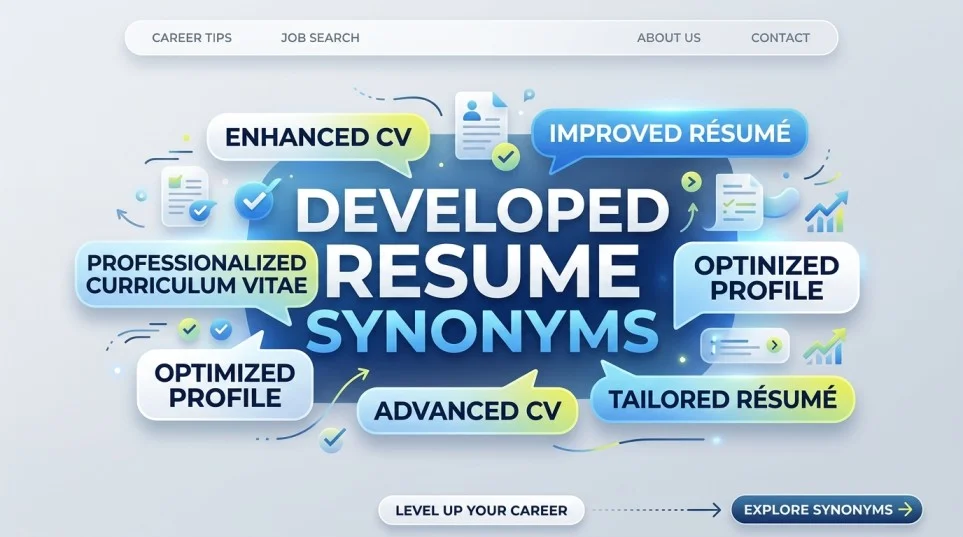
When Sarah wrote her resume, she needed strong words to describe her work. Instead of writing “I did a new training program,” she wrote, “Developed a new training program.” Developed means creating or building something, often step by step, until it worked well.
This word is common in resumes, job interviews, and business writing because it shows action and effort. But using “developed” in every sentence quickly becomes repetitive and boring. That is why English learners, job seekers, and content writers need synonyms of developed. Learning new words helps you describe your work with variety and confidence.
This article explains the meaning of “developed,” its synonyms, grammar, history, pronunciation, and semantic categories, with clear examples for every word. By the end, you will know exactly which word to use in your own resume or writing.
Meaning of Developed
Definition
Developed (verb, past tense): Created, built, or improved something over time, often through planning and effort.
Examples
- She developed a new marketing plan for the company.
- The team developed a simple app in three months.
Connotative Meaning
- Positive tone: Skilled, capable, proactive, resourceful
- Negative tone: Rarely negative, but can sound vague if used without details
- Neutral tone: Simply describing the act of creating or building something
(Connotation: the feeling or emotion a word carries beyond its basic dictionary meaning.)
Etymology
- The word comes from the Old French desveloper, meaning “to unwrap” or “to unfold.”
- It was formed from des- (undoing) and voloper (to wrap), related to the idea of revealing something hidden.
- Over time, the meaning shifted from “unwrapping” to “growing” or “building something new.”
Short History
- Old English (450–1100): The word did not exist; related ideas used words like weaxan (to grow).
- Middle English (1100–1500): French influence introduced early forms close to “envelop” and “develop,” still tied to unwrapping.
- Modern English (1500–Present): “Develop” gained its modern meaning of growth and creation by the 1700s. “Developed” became a common resume word in the 1900s to describe professional achievements.
Pronunciation (US & UK – IPA)
- US: /dɪˈvɛl.əpt/
- UK: /dɪˈvel.əpt/
Syllables
de-vel-oped
Affixation Pattern of Developed
- Root: velop- (from Old French voloper, “to wrap”)
- Prefix: de- (a reversal or undoing prefix, here showing a change of state)
- Suffix: -ed (marks the past tense/past participle)
Word formation from this root (grammatical category in brackets):
- Develop (verb) — to create or build something
- Developed (verb, past tense/adjective) — created or built successfully
- Developing (verb, gerund/adjective) — in the process of growing or building
- Development (noun) — the act or process of developing
- Developer (noun) — a person who develops something
- Undeveloped (adjective) — not yet built or improved
A List of Powerful Synonyms of Developed
1. Created (verb)
US /kriˈeɪ.tɪd/ | UK /kriˈeɪ.tɪd/ Meaning: Made something new that did not exist before.
- She created a training guide for new hires.
- The team created a system to track sales.
2. Built (verb)
US /bɪlt/ | UK /bɪlt/ Meaning: Constructed or put together something step by step.
- He built a strong sales network in two years.
- The company built its reputation on good service.
3. Designed (verb)
US /dɪˈzaɪnd/ | UK /dɪˈzaɪnd/ Meaning: Planned and shaped something with a clear purpose.
- She designed a new layout for the website.
- The engineer designed a faster process for packing orders.
4. Established (verb)
US /ɪˈstæb.lɪʃt/ | UK /ɪˈstæb.lɪʃt/ Meaning: Set up or started something so it becomes lasting.
- He established a mentoring program at the office.
- The founder established the company in 2010.
5. Formulated (verb)
US /ˈfɔːr.mjə.leɪ.tɪd/ | UK /ˈfɔː.mjʊ.leɪ.tɪd/ Meaning: Created a plan or idea through careful thought.
- She formulated a new pricing strategy.
- The team formulated steps to reduce waste.
6. Implemented (verb)
US /ˈɪm.plə.mɛn.tɪd/ | UK /ˈɪm.plɪ.men.tɪd/ Meaning: Put a plan or idea into action.
- He implemented a new filing system.
- The manager implemented changes to boost morale.
7. Launched (verb)
US /lɔːntʃt/ | UK /lɔːntʃt/ Meaning: Started something new, often publicly or officially.
- The company launched a new product line.
- She launched a blog to share career tips.
8. Produced (verb)
US /prəˈduːst/ | UK /prəˈdjuːst/ Meaning: Made or brought something into existence through effort.
- The team produced a detailed report on time.
- She produced three successful marketing campaigns.
9. Generated (verb)
US /ˈdʒɛn.ə.reɪ.tɪd/ | UK /ˈdʒen.ə.reɪ.tɪd/ Meaning: Caused something to exist, often results or ideas.
- His plan generated strong sales growth.
- The workshop generated new ideas for the team.
10. Engineered (verb)
US /ˌɛn.dʒəˈnɪrd/ | UK /ˌen.dʒɪˈnɪəd/ Meaning: Carefully planned and built something using skill.
- She engineered a smoother workflow for the office.
- The team engineered a solution to the shipping delays.
11. Constructed (verb)
US /kənˈstrʌk.tɪd/ | UK /kənˈstrʌk.tɪd/ Meaning: Built something using organized steps or parts.
- He constructed a training manual for new staff.
- The team constructed a clear project timeline.
12. Devised (verb)
US /dɪˈvaɪzd/ | UK /dɪˈvaɪzd/ Meaning: Thought of and planned something clever or useful.
- She devised a faster way to process orders.
- The group devised a plan to cut costs.
13. Initiated (verb)
US /ɪˈnɪʃ.i.eɪ.tɪd/ | UK /ɪˈnɪʃ.i.eɪ.tɪd/ Meaning: Started a project or process for the first time.
- He initiated a recycling program at work.
- The manager initiated weekly team check-ins.
14. Crafted (verb)
US /ˈkræf.tɪd/ | UK /ˈkrɑːf.tɪd/ Meaning: Made something with skill and careful attention.
- She crafted a clear and simple onboarding guide.
- The writer crafted a strong opening for the report.
15. Expanded (verb)
US /ɪkˈspæn.dɪd/ | UK /ɪkˈspæn.dɪd/ Meaning: Made something larger or grew it beyond its original size.
- He expanded the customer service team.
- The business expanded into three new markets.
16. Enhanced (verb)
US /ɪnˈhænst/ | UK /ɪnˈhɑːnst/ Meaning: Made something better or more effective.
- She enhanced the training program with new videos.
- The update enhanced the app’s speed.
17. Improved (verb)
US /ɪmˈpruːvd/ | UK /ɪmˈpruːvd/ Meaning: Made something better than it was before.
- He improved the team’s response time.
- The new system improved overall accuracy.
18. Advanced (verb)
US /ədˈvænst/ | UK /ədˈvɑːnst/ Meaning: Moved something forward or made progress on it.
- She advanced the project ahead of schedule.
- The engineer advanced the design through several tests.
19. Cultivated (verb)
US /ˈkʌl.tə.veɪ.tɪd/ | UK /ˈkʌl.tɪ.veɪ.tɪd/ Meaning: Encouraged something to grow slowly through care and effort.
- He cultivated strong relationships with clients.
- The manager cultivated a positive team culture.
20. Pioneered (verb)
US /ˌpaɪ.əˈnɪrd/ | UK /ˌpaɪ.əˈnɪəd/ Meaning: Was among the first to create or try something new.
- She pioneered a new approach to remote training.
- The company pioneered eco-friendly packaging.
21. Formed (verb)
US /fɔːrmd/ | UK /fɔːmd/ Meaning: Brought something into existence by shaping or organizing it.
- He formed a small team to handle new clients.
- They formed a partnership with a local supplier.
22. Shaped (verb)
US /ʃeɪpt/ | UK /ʃeɪpt/ Meaning: Influenced or guided how something developed.
- Her feedback shaped the final design.
- Early experience shaped his leadership style.
23. Refined (verb)
US /rɪˈfaɪnd/ | UK /rɪˈfaɪnd/ Meaning: Improved something by making small, careful changes.
- She refined the sales pitch after each meeting.
- The team refined the process to save time.
24. Strengthened (verb)
US /ˈstrɛŋk.θənd/ | UK /ˈstreŋk.θənd/ Meaning: Made something more solid, reliable, or effective.
- He strengthened the company’s client base.
- The training strengthened her presentation skills.
25. Progressed (verb)
US /prəˈɡrɛst/ | UK /prəˈɡrest/ Meaning: Moved forward steadily toward a goal.
- The project progressed faster after the changes.
- Her skills progressed quickly during the internship.
26. Innovated (verb)
US /ˈɪn.ə.veɪ.tɪd/ | UK /ˈɪn.ə.veɪ.tɪd/ Meaning: Introduced new ideas or methods to improve something.
- He innovated a faster checkout process.
- The team innovated ways to reduce paperwork.
27. Built Up (phrasal verb)
US /bɪlt ʌp/ | UK /bɪlt ʌp/ Meaning: Increased or strengthened something gradually over time.
- She built up a loyal customer base.
- He built up his skills through years of practice.
28. Grew (verb)
US /ɡruː/ | UK /ɡruː/ Meaning: Made something larger or more successful over time.
- She grew the department from three people to twelve.
- He grew the social media following steadily.
29. Fostered (verb)
US /ˈfɔː.stɚd/ | UK /ˈfɒs.təd/ Meaning: Encouraged the growth or development of something.
- She fostered teamwork across departments.
- The manager fostered a culture of honest feedback.
30. Spearheaded (verb)
US /ˈspɪr.hɛd.ɪd/ | UK /ˈspɪə.hed.ɪd/ Meaning: Led an important project or effort from the start.
- He spearheaded the company’s first sustainability plan.
- She spearheaded a new hiring strategy for the team.
Prototype Meaning
When most people hear “developed,” they picture someone taking an idea and turning it into something real through steady effort — like building a project, a skill, or a system from the ground up. This is the prototype: a clear act of creating or improving something over time, usually through planning and hard work.
Prototype Categorization
Grouping the synonyms of developed helps writers, especially resume writers, pick the strongest word for each achievement.
- Starting something new: Created, Established, Initiated, Launched, Pioneered, Spearheaded
- Building and forming: Built, Constructed, Formed, Engineered, Crafted
- Planning and designing: Designed, Formulated, Devised, Innovated
- Growing and expanding: Expanded, Grew, Built Up, Cultivated, Progressed
- Improving and strengthening: Enhanced, Improved, Refined, Strengthened, Advanced, Shaped
- Producing results: Produced, Generated, Implemented, Fostered
These categories make it easier to match the right word to the right achievement. For example, “spearheaded” fits a leadership story, while “refined” fits a process improvement. Careful word choice makes resumes and reports sound more precise and professional.
Antonyms of Developed
- Neglected (verb, past tense): Failed to give attention or care to something
- Abandoned (verb, past tense): Stopped working on something before it was finished
- Weakened (verb, past tense): Made something less strong or effective
- Undeveloped (adjective): Not yet built, grown, or improved
- Halted (verb, past tense): Stopped a process or project from moving forward
Short Questions and Answers
- What does developed mean? It means created, built, or improved something, usually through effort and planning.
- When should development be used? Use it to describe achievements, projects, or skills you built or improved, especially in resumes and reports.
- Is development positive or negative? It is almost always positive, since it shows effort, skill, and progress.
- How is it different from similar words? Words like “created” focus on making something new, while “developed” focuses on growth and improvement over time.
Conclusion
Learning the synonyms of developed does more than expand your word list. It improves your vocabulary, strengthens your resume and daily writing, and helps you avoid repeating the same word again and again. Whether you write “engineered,” “cultivated,” or “spearheaded,” each word highlights your effort with more precision.
Studying these synonyms also builds real confidence in English. You start to notice small differences in tone, and you choose the word that best matches your achievement. This skill helps job seekers, students, and writers sound clearer and more impressive.
Keep practicing a little every day. Read new words, use them in real sentences, and try replacing common words with stronger alternatives. Over time, this habit will make your English — and your resume — stronger, richer, and more confident.

I am a linguist with 7 years of experience in English language teaching, including postgraduate-level instruction. My expertise includes English grammar, and I contribute as a content and blog writer, producing scholarly and educational language resources.