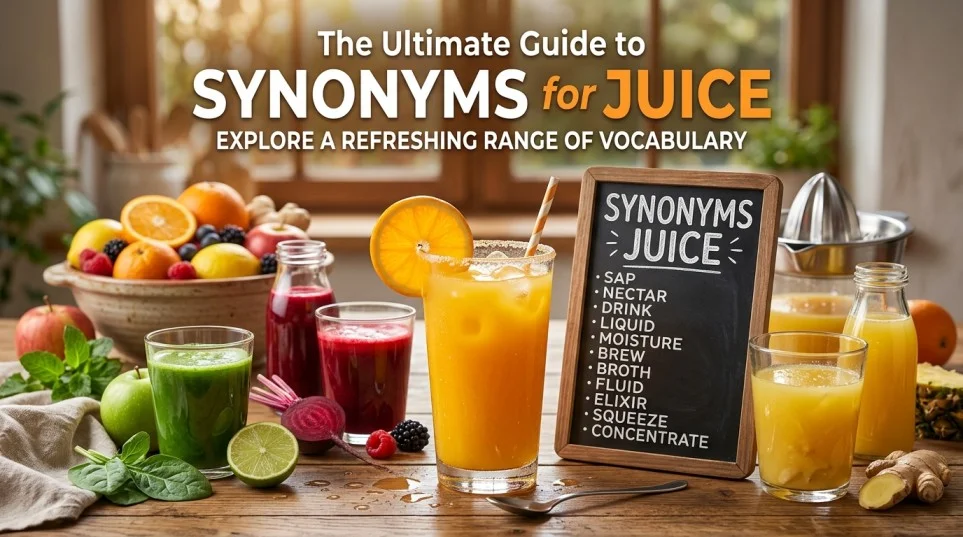
Imagine a hot morning. You cut an orange in half and squeeze it. A cold, sweet liquid drips into your glass. That liquid is juice. You drink it fast because it feels fresh and alive. This small moment happens in kitchens all over the world every single day.
The word juice is common because people talk about food and drinks all the time. It is simple, short, and easy to say. But writers and English learners often use it too many times in one piece of writing. This makes the writing feel flat and boring.
Learning synonyms of juice helps you avoid this problem. It gives you new words for the same idea. It also helps content writers sound more skilled and helps ESL learners speak with more confidence.
This article will explain the meaning of juice, its history, pronunciation, grammar, and word family. Then it will share 30 useful synonyms of juice, each with meaning and example sentences, so you can use the right word at the right time.
Meaning of Juice
Definition
Juice (Noun): Juice is the liquid that comes from fruits, vegetables, or meat. It is often sweet or sour and safe to drink.
Examples
- She drank a glass of orange juice with breakfast.
- The chef added lemon juice to the fish for extra flavor.
Connotative Meaning
The word juice carries different feelings depending on how it is used.
- Positive tone: Juice often sounds fresh, healthy, and natural, like a morning drink full of vitamins.
- Negative tone: In slang, “juice” can mean gossip or pressure, such as “office juice,” which sounds nosy or unfair.
- Neutral tone: In science, juice simply means liquid taken from a plant or fruit, with no emotion attached.
(Connotation means the feeling or idea a word gives, beyond its plain dictionary meaning.)
Etymology
- The word juice comes from the Old French word jus, meaning “liquid” or “sap.”
- Jus came from the Latin word ius, meaning “broth” or “sauce.”
- The word entered English in the 1300s and slowly changed meaning to focus on fruit and vegetable liquid.
Short History
- Old English (450–1100): The word juice did not exist yet. English speakers used native words like wos or wæter for liquid.
- Middle English (1100–1500): The French word jus entered English after the Norman Conquest and became juys or juce, used mostly in cooking.
- Modern English (1500–Present): The spelling settled as “juice.” Its meaning grew to include fruit drinks, body fluids, and even slang for energy or electricity.
Pronunciation (US & UK – IPA)
- US: /dʒuːs/
- UK: /dʒuːs/
Syllables
juice (one syllable)
Affixation Pattern of Juice
Root: juice (from Old French jus) Prefix: none Suffix: none in the base word; suffixes appear in related forms
Word Formation of Juice
- Juicy (adjective) — full of juice or very interesting
- Juicer (noun) — a machine that removes juice from fruit
- Juicing (noun/verb) — the act of making juice
- Juiceless (adjective) — having no juice, dry
A List of Best Synonyms of Juice
Below are 30 helpful synonyms of juice. Each one includes pronunciation, a simple meaning, and two example sentences. Learning these synonyms of juice will help you write and speak with more variety.
1. Nectar (Noun)
US: /ˈnɛktər/ | UK: /ˈnɛktə/
Meaning: A sweet, thick fruit juice, often served as a drink.
Examples:
- She poured mango nectar into two glasses.
- Peach nectar tastes sweeter than plain water.
2. Extract (Noun)
US: /ˈɛkstrækt/ | UK: /ˈɛkstrækt/
Meaning: A concentrated liquid taken out of a plant or fruit.
Examples:
- Vanilla extract gives the cake a rich smell.
- The company sells natural fruit extract for flavoring.
3. Sap (Noun)
US: /sæp/ | UK: /sæp/
Meaning: The natural liquid found inside trees and plants.
Examples:
- Maple sap is boiled to make syrup.
- The tree’s sap dripped slowly down the bark.
4. Liquid (Noun)
US: /ˈlɪkwɪd/ | UK: /ˈlɪkwɪd/
Meaning: Any wet substance that flows, including juice.
Examples:
- Pour the liquid into a clean cup.
- The recipe needs one cup of liquid.
5. Fluid (Noun)
US: /ˈfluːɪd/ | UK: /ˈfluːɪd/
Meaning: A general word for any liquid substance.
Examples:
- Drink plenty of fluid during hot weather.
- The fruit released a thin fluid when cut.
6. Essence (Noun)
US: /ˈɛsəns/ | UK: /ˈɛsns/
Meaning: A strong, concentrated liquid that holds a fruit’s flavor.
Examples:
- Lemon essence adds a fresh taste to desserts.
- A drop of rose essence changed the drink’s flavor.
7. Squash (Noun, UK usage)
US: /skwɑʃ/ | UK: /skwɒʃ/
Meaning: A sweet fruit drink, often mixed with water before drinking.
Examples:
- The children asked for orange squash at the party.
- We keep a bottle of lime squash in the fridge.
8. Cordial (Noun)
US: /ˈkɔːrdʒəl/ | UK: /ˈkɔːdiəl/
Meaning: A sweet, fruit-flavored drink that is often diluted with water.
Examples:
- Grandma made a homemade blackcurrant cordial.
- Add a splash of cordial to sparkling water.
9. Syrup (Noun)
US: /ˈsɪrəp/ | UK: /ˈsɪrəp/
Meaning: A thick, sweet liquid made from boiled fruit or sugar.
Examples:
- She drizzled fruit syrup over the pancakes.
- The syrup was too sweet for his taste.
10. Broth (Noun)
US: /brɔːθ/ | UK: /brɒθ/
Meaning: A thin liquid made by cooking meat, bones, or vegetables.
Examples:
- He sipped hot vegetable broth on a cold day.
- The soup starts with a simple chicken broth.
11. Elixir (Noun)
US: /ɪˈlɪksər/ | UK: /ɪˈlɪksə/
Meaning: A special, often magical or healthy liquid drink.
Examples:
- The old story spoke of a magic elixir of life.
- This green drink is her daily health elixir.
12. Liquor (Noun)
US: /ˈlɪkər/ | UK: /ˈlɪkə/
Meaning: A liquid produced by cooking or soaking food, especially in old cooking terms.
Examples:
- Save the cooking liquor to make a sauce.
- The fish was served with its own liquor.
13. Brew (Noun)
US: /bruː/ | UK: /bruː/
Meaning: A liquid made by soaking or boiling plant parts, like tea or fruit.
Examples:
- She made a fruity herbal brew for guests.
- The berry brew smelled sweet and strong.
14. Concentrate (Noun)
US: /ˈkɑːnsəntreɪt/ | UK: /ˈkɒnsəntreɪt/
Meaning: Juice with the water removed, meant to be mixed with water again.
Examples:
- The store sells frozen orange concentrate.
- Mix the concentrate with cold water before serving.
15. Infusion (Noun)
US: /ɪnˈfjuːʒən/ | UK: /ɪnˈfjuːʒən/
Meaning: A liquid made by soaking fruit or herbs in water.
Examples:
- The chef prepared a berry infusion for the dessert sauce.
- A ginger infusion helps calm an upset stomach.
16. Potion (Noun)
US: /ˈpoʊʃən/ | UK: /ˈpəʊʃən/
Meaning: A liquid drink, often used in stories with magical powers.
Examples:
- In the story, the witch brewed a strange potion.
- Kids called the green smoothie a “power potion.”
17. Tonic (Noun)
US: /ˈtɑːnɪk/ | UK: /ˈtɒnɪk/
Meaning: A drink believed to make a person feel healthier or stronger.
Examples:
- She drinks a daily tonic made from citrus fruit.
- The herbal tonic is popular in traditional medicine.
18. Beverage (Noun)
US: /ˈbɛvərɪdʒ/ | UK: /ˈbɛvərɪdʒ/
Meaning: A general word for any drink, including juice.
Examples:
- The menu offers several cold beverages.
- Fruit juice is a popular breakfast beverage.
19. Pulp (Noun)
US: /pʌlp/ | UK: /pʌlp/
Meaning: The soft, thick liquid part of fruit, often with small bits inside.
Examples:
- He likes orange juice with extra pulp.
- The pulp settled at the bottom of the glass.
20. Secretion (Noun)
US: /sɪˈkriːʃən/ | UK: /sɪˈkriːʃən/
Meaning: A liquid released naturally by a plant, body, or gland.
Examples:
- The plant’s secretion protects it from insects.
- Scientists studied the fruit’s natural secretion.
21. Moisture (Noun)
US: /ˈmɔɪstʃər/ | UK: /ˈmɔɪstʃə/
Meaning: A small amount of liquid found inside something.
Examples:
- The fruit lost its moisture after a week.
- Fresh grapes are full of natural moisture.
22. Distillate (Noun)
US: /ˈdɪstɪleɪt/ | UK: /ˈdɪstɪleɪt/
Meaning: A pure liquid separated from a mixture through heating.
Examples:
- The lab created a fruit distillate for testing.
- This drink starts as a plant distillate.
23. Puree (Noun)
US: /pjʊˈreɪ/ | UK: /ˈpjʊəreɪ/
Meaning: A thick, smooth liquid made by blending fruit or vegetables.
Examples:
- Baby food often starts as a fruit puree.
- She blended a mango puree for the smoothie.
24. Smoothie (Noun)
US: /ˈsmuːði/ | UK: /ˈsmuːði/
Meaning: A thick drink made by blending fruit, sometimes with milk or yogurt.
Examples:
- He makes a banana smoothie every morning.
- The cafe sells berry smoothies all day.
25. Squeeze (Noun)
US: /skwiːz/ | UK: /skwiːz/
Meaning: A small amount of liquid pressed out of fruit.
Examples:
- Add a squeeze of lime to the tea.
- A fresh squeeze of lemon brightens the dish.
26. Drink (Noun)
US: /drɪŋk/ | UK: /drɪŋk/
Meaning: Any liquid made for people to swallow, including fruit juice.
Examples:
- She ordered a cold fruit drink at lunch.
- This drink is made from fresh apples.
27. Fruit Drink (Noun)
US: /fruːt drɪŋk/ | UK: /fruːt drɪŋk/
Meaning: A beverage made mostly or partly from fruit liquid.
Examples:
- The store shelf was full of fruit drinks.
- Kids love this colorful fruit drink.
28. Serum (Noun)
US: /ˈsɪrəm/ | UK: /ˈsɪərəm/
Meaning: A watery liquid, often used in science or skincare, similar in form to plant juice.
Examples:
- The plant serum is used in natural skincare.
- Researchers extracted a serum from the fruit skin.
29. Humor (Noun, archaic)
US: /ˈhjuːmər/ | UK: /ˈhjuːmə/
Meaning: An old word for any natural body or plant fluid.
Examples:
- Old medical books spoke of the body’s four humors.
- The term humor once meant any internal liquid.
30. Wort (Noun)
US: /wɜːrt/ | UK: /wɜːt/
Meaning: A sweet liquid made from grain, used before it becomes beer.
Examples:
- Brewers boil the wort before adding yeast.
- The wort smelled sweet and grainy.
Prototype Meaning
When most people hear the word juice, they picture a cold glass of orange or apple juice on a breakfast table. It feels fresh, fruity, and healthy. This is the prototype meaning, the picture that comes to mind first, even though juice can also mean sap, broth, or even slang for energy.
Prototype Categorization
Grouping the synonyms of juice into categories helps writers pick the right word for the right moment.
- Fruit and plant liquids: nectar, sap, pulp, extract, essence, concentrate
- Everyday drinks: beverage, drink, smoothie, fruit drink, squash, cordial
- Cooking liquids: broth, liquor, wort, infusion
- Special or old-fashioned words: elixir, potion, tonic, humor
- Scientific or technical liquids: secretion, moisture, distillate, serum, fluid, liquid
- Small or blended amounts: squeeze, puree, syrup, brew
Sorting synonyms of juice this way helps a writer match tone and context. A recipe needs simple words like liquid or broth, while a story might need elixir or potion for a magical feel.
Antonyms of Juice
- Solid (Noun) — a firm substance with no liquid form
- Dryness (Noun) — the state of having no moisture at all
- Pulp-free (Adjective) — describing a liquid with nothing extracted or left inside
- Dust (Noun) — a dry, powdery substance, the opposite of any wet liquid
Short Questions and Answers
- What does juice mean? Juice is the liquid taken from fruits, vegetables, or meat, often used as a drink.
- When should juice be used? Use juice when talking about fresh fruit drinks, cooking liquids, or informal slang for energy.
- Is juice positive or negative? It is mostly positive, since it suggests freshness and health, though slang uses can sound negative or gossip-related.
- How is it different from similar words? Unlike broth or liquor, juice usually comes from fruit and tastes sweet, while broth and liquor often come from meat or cooking.
Conclusion
Learning the word juice and its many synonyms does more than add new words to your list. It improves your vocabulary, strengthens both your writing and speaking, and helps you avoid repeating the same word again and again. Knowing different synonyms of juice also builds real confidence when speaking or writing in English, because you always have another word ready to use.
Try using a few new synonyms of juice this week in your own sentences. Small daily practice, even five minutes a day, slowly builds a strong and flexible vocabulary that lasts.

I am a linguist with 7 years of experience in English language teaching, including postgraduate-level instruction. My expertise includes English grammar, and I contribute as a content and blog writer, producing scholarly and educational language resources.