Have you ever sat at your desk, ready to send an update, and paused? You want to write a professional email, but you have already used the word “mail” three times in one paragraph. This is a common problem for English learners and content writers alike. “Mail” is a handy, everyday word we use to describe the letters, packages, and digital messages we send and receive. However, using the same word over and over makes writing feel dry and repetitive.
To keep your readers engaged, you need a rich vocabulary. Learning synonyms does more than just stop you from repeating yourself; it helps you match your tone to your exact situation. This article will explore the core meaning of “mail,” look at its history and pronunciation, and dive into its emotional tones.
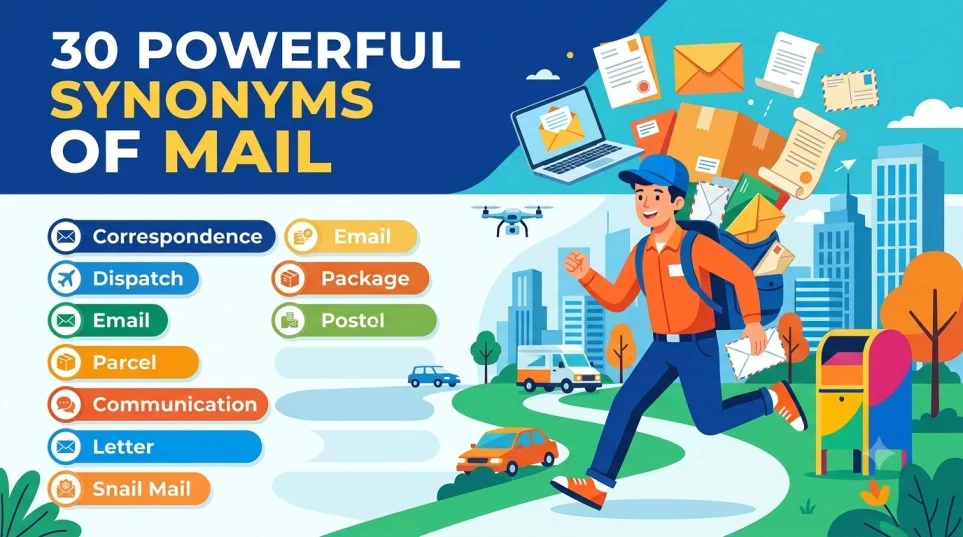
Most importantly, you will learn 30 powerful synonyms divided into clear categories, complete with real-life examples, grammatical tips, and pronunciation guides to help you write and speak with complete confidence.
Meaning of Mail
Definition
mail (Noun): Letters, packages, or paper messages that are sent through a postal system, or digital messages sent over the internet.
Examples
- The carrier delivered a small stack of mail to our front door this morning.
- I need to check my inbox to see if the confirmation mail has arrived yet.
Connotative Meaning
- Positive tone: When mail brings exciting news, like a birthday card, a love letter, or an acceptance package, it feels warm and welcoming.
- Negative tone: Mail can feel stressful or annoying when it consists of bills, junk flyers, or spam messages that crowd your inbox.
- Neutral tone: In daily business, mail is simply a basic tool used to share information and ship physical items.
Note: Connotation is the emotional feeling or secondary meaning that a word brings to mind, going beyond its literal dictionary definition.
Etymology
- Origin: The word comes from the Old French word male, which referred to a traveling bag, pouch, or pack. This French word came from a Germanic root, malho-, meaning a leather bag.
- Historical Evolution:
- Old English (450–1100): The word did not exist in Old English in its modern postal sense.
- Middle English (1100–1500): Spelled as male, it was used to describe a traveler’s bag or pack.
- Modern English (1500–Present): By the mid-1600s, people began using the word to mean a “bag full of letters.” Over time, the bag itself was forgotten, and “mail” came to mean the actual letters and packages inside.
Pronunciation & Syllables
- US: /meɪl/
- UK: /meɪl/
- Syllables: mail (1 syllable)
Affixation Pattern of Mail
- Root: mail
- Prefix: None
- Suffix: None
Word Formation
- Mailable (Adjective): Suitable to be sent by mail.
- Mailer (Noun): A person who sends mail, or a printed advertisement sent to many people.
- Mailing (Noun): The act of sending letters, or a batch of mail sent out at one time.
- Mailbox (Noun): A physical box where mail is delivered or dropped off.
A List of high Qualify 30 Synonyms of Mail
1. Post (Noun)
- Pronunciation: US: /poʊst/ | UK: /pəʊst/
- Meaning: The official system or service used for collecting and delivering letters and packages.
- Examples:
- Please put this letter in the post before the afternoon collection.
- The package was delayed in the post due to the winter storm.
2. Correspondence (Noun)
- Pronunciation: US: /ˌkɔːrəˈspɑːndəns/ | UK: /ˌkɒrɪˈspɒndəns/
- Meaning: Written communication exchanged between people, especially by letters or emails.
- Examples:
- The lawyer kept a neat file of all correspondence regarding the property sale.
- I have fallen behind on my personal correspondence lately.
3. Letter (Noun)
- Pronunciation: US: /ˈletər/ | UK: /ˈletə(r)/
- Meaning: A written, typed, or printed communication sent in an envelope.
- Examples:
- She wrote a long, handwritten letter to her grandmother.
- He received a formal job offer letter in the mail yesterday.
4. Dispatch (Noun)
- Pronunciation: US: /dɪˈspætʃ/ | UK: /dɪˈspætʃ/
- Meaning: An official message, report, or shipment sent quickly to a destination.
- Examples:
- The military commander sent an urgent dispatch to headquarters.
- We await a fresh dispatch of goods from our supplier.
5. Email (Noun)
- Pronunciation: US: /ˈiːmeɪl/ | UK: /ˈiːmeɪl/
- Meaning: Messages sent and received electronically over a computer network.
- Examples:
- I sent an email to the customer support team this morning.
- Make sure to check your spam folder if the email does not arrive.
6. Package (Noun)
- Pronunciation: US: /ˈpækɪdʒ/ | UK: /ˈpækɪdʒ/
- Meaning: An object or group of items wrapped in paper or packed in a box for delivery.
- Examples:
- The delivery worker left a heavy package on the porch.
- She wrapped the glass vase carefully to ensure the package arrived safely.
7. Parcel (Noun)
- Pronunciation: US: /ˈpɑːrsl/ | UK: /ˈpɑːsl/
- Meaning: A wrapped bundle of goods sent through the postal service.
- Examples:
- The clerk weighed the parcel before charging for shipping.
- A mysterious parcel arrived in the mail with no return address.
8. Packet (Noun)
- Pronunciation: US: /ˈpækɪt/ | UK: /ˈpækɪt/
- Meaning: A small paper container, envelope, or parcel.
- Examples:
- The office manager sent an information packet to all new employees.
- He slipped the small packet of documents into his briefcase.
9. Message (Noun)
- Pronunciation: US: /ˈmesɪdʒ/ | UK: /ˈmesɪdʒ/
- Meaning: A verbal, written, or recorded communication sent to a recipient.
- Examples:
- She left a brief message on his desk while he was away.
- I received a friendly text message from an old high school classmate.
10. Communication (Noun)
- Pronunciation: US: /kəˌmjuːnɪˈkeɪʃn/ | UK: /kəˌmjuːnɪˈkeɪʃn/
- Meaning: A letter, note, or digital message that shares information.
- Examples:
- The school sends out a weekly communication to all parents.
- We received an official communication from the city council.
11. Delivery (Noun)
- Pronunciation: US: /dɪˈlɪvəri/ | UK: /dɪˈlɪvəri/
- Meaning: Letters, packages, or goods that have been brought to a home or office.
- Examples:
- The office receives a fresh delivery of paper supplies every Monday.
- I am staying home today to wait for an important furniture delivery.
12. Epistle (Noun)
- Pronunciation: US: /ɪˈpɪsl/ | UK: /ɪˈpɪsl/
- Meaning: A long, formal, or elegant letter, often written in a literary style.
- Examples:
- The professor penned a scholarly epistle to the university board.
- She discovered an old wartime epistle tucked inside the book.
13. Circular (Noun)
- Pronunciation: US: /ˈsɜːrkjələr/ | UK: /ˈsɜːkjələ(r)/
- Meaning: A printed letter or advertisement sent to a large number of people at once.
- Examples:
- The grocery store prints a weekly circular featuring discounts.
- Our mailbox was stuffed with plastic wraps and advertising circulars.
14. Bulletin (Noun)
- Pronunciation: US: /ˈbʊlətɪn/ | UK: /ˈbʊlətɪn/
- Meaning: A short, official statement or news report issued for immediate public viewing.
- Examples:
- The school board posted a bulletin about the upcoming weather closure.
- We received a safety bulletin from the local police department.
15. Note (Noun)
- Pronunciation: US: /noʊt/ | UK: /nəʊt/
- Meaning: A brief, informal written message to remind someone of something.
- Examples:
- She left a polite note on the fridge asking us to buy milk.
- He scribbled a quick thank-you note and slipped it into her locker.
16. Memorandum / Memo (Noun)
- Pronunciation: US: /ˈmeməraʊndəm/ | UK: /ˈmemərændəm/
- Meaning: A written message used to share information in a business office.
- Examples:
- The director sent an urgent memorandum explaining the budget changes.
- Check your inbox for the memo regarding our holiday hours.
17. Missive (Noun)
- Pronunciation: US: /ˈmɪsɪv/ | UK: /ˈmɪsɪv/
- Meaning: A written message, letter, or official document that is sent out.
- Examples:
- The diplomat sent a long, detailed missive to his government.
- She spent the evening drafting a stern missive to the landlord.
18. Shipment (Noun)
- Pronunciation: US: /ˈʃɪpmənt/ | UK: /ˈʃɪpmənt/
- Meaning: A load of goods or packages transported to a specific place.
- Examples:
- The store manager confirmed that the next shipment of coats is on its way.
- We tracked the international cargo shipment as it crossed the ocean.
19. Postcard (Noun)
- Pronunciation: US: /ˈpoʊstkɑːrd/ | UK: /ˈpəʊstkɑːd/
- Meaning: A card with a picture on one side that can be sent through the post without an envelope.
- Examples:
- She mailed a colorful postcard from her beach vacation in Florida.
- He keeps a collection of vintage postcards on his desk.
20. Newsletter (Noun)
- Pronunciation: US: /ˈnuːzletər/ | UK: /ˈnjuːzletə(r)/
- Meaning: A printed or electronic report containing news sent to subscribers.
- Examples:
- Our club publishes a monthly newsletter detailing upcoming hikes.
- I subscribed to their email newsletter to get weekly cooking tips.
21. Snail Mail (Noun)
- Pronunciation: US: /ˈsneɪl meɪl/ | UK: /ˈsneɪl meɪl/
- Meaning: Physical letters and packages sent through the traditional post office, which is slower than email.
- Examples:
- I still prefer sending handwritten holiday cards via snail mail.
- The bank sent my new debit card through snail mail for security reasons.
22. Correspondence Card (Noun)
- Pronunciation: US: /ˌkɔːrəˈspɑːndəns kɑːrd/ | UK: /ˌkɒrɪˈspɒndəns kɑːd/
- Meaning: A thick, small card used for writing quick personal notes.
- Examples:
- She wrote a sweet thank-you note on a personalized correspondence card.
- The stationery set included matching envelopes and correspondence cards.
23. Courier (Noun)
- Pronunciation: US: /ˈkʊriər/ | UK: /ˈkʊriə(r)/
- Meaning: Mail or packages delivered by a specialized messenger service.
- Examples:
- We sent the legal documents by overnight courier to meet the deadline.
- The hospital relies on a medical courier to transport blood samples.
24. Direct Mail (Noun)
- Pronunciation: US: /dəˈrekt meɪl/ | UK: /daɪˈrekt meɪl/
- Meaning: Physical advertising material sent directly to people in the post.
- Examples:
- The marketing team launched a direct mail campaign to local homes.
- Most direct mail ends up in our recycling bin immediately.
25. Junk Mail (Noun)
- Pronunciation: US: /ˈdʒʌŋk meɪl/ | UK: /ˈdʒʌŋk meɪl/
- Meaning: Unwanted advertising flyers, catalogs, and letters sent by post.
- Examples:
- My mailbox is always stuffed with local credit card offers and junk mail.
- She spent ten minutes shredding junk mail after work.
26. Courier Service (Noun)
- Pronunciation: US: /ˈkʊriər ˈsɜːrvɪs/ | UK: /ˈkʊriə(r) ˈsɜːvɪs/
- Meaning: A company that delivers urgent mail and packages safely and quickly.
- Examples:
- We paid extra for a local courier service to deliver the passport.
- The office uses a reliable courier service for all valuable contracts.
27. Consignment (Noun)
- Pronunciation: US: /kənˈsaɪnmənt/ | UK: /kənˈsaɪnmənt/
- Meaning: A batch of goods or packages sent to a person or place to be sold or used.
- Examples:
- The warehouse received a large consignment of winter boots.
- The seller sent the art pieces on consignment to the gallery.
28. Airmail (Noun)
- Pronunciation: US: /ˈermeɪl/ | UK: /ˈeəmeɪl/
- Meaning: Mail transported overseas or across long distances by aircraft.
- Examples:
- He paid a higher fee to send the package by airmail.
- She used a lightweight airmail envelope to write to her family abroad.
29. Express Mail (Noun)
- Pronunciation: US: /ɪkˈspres meɪl/ | UK: /ɪkˈspres meɪl/
- Meaning: An expedited postal service that promises very fast delivery, often overnight.
- Examples:
- I sent the contract via express mail so it would arrive by 9:00 AM.
- The shop offers express mail options for last-minute shoppers.
30. Paperwork (Noun)
- Pronunciation: US: /ˈpeɪpərwɜːrk/ | UK: /ˈpeɪpəwɜːk/
- Meaning: Documents, forms, and letters that must be read, filled out, or mailed.
- Examples:
- The new job requires me to complete a mountain of paperwork.
- We spent hours going through the tax paperwork sent in the mail.
Prototype Meaning
When people hear the word “mail,” they usually picture a mail carrier in a uniform walking up to a metal mailbox. They imagine a stack of physical paper letters, bills, and colorful catalogs tied with a rubber band. While we use digital email every single day, our minds still go first to physical, paper envelopes and cardboard boxes being carried by hand or truck to our front door.
Prototype Categorization
Grouping synonyms helps you select the perfect word for your writing. Here is a quick reference table to find the right word for your context:
| Category | Best Synonyms to Use | When to Use |
| Official & Business | Correspondence, Dispatch, Memorandum/Memo, Communication, Missive, Epistle | Formal business updates, legal letters, or academic reports. |
| Digital Exchange | Email, Message | Quick, online communications where speed is key. |
| Physical Shipping | Package, Parcel, Packet, Shipment, Consignment, Delivery | Cardboard boxes, physical inventory, and cargo shipments. |
| Informal & Short Notes | Note, Postcard, Correspondence Card | Casual, friendly, or brief handwritten updates. |
| Mass Communication | Circular, Bulletin, Newsletter, Direct Mail, Junk Mail | Printed materials sent to a large group of people simultaneously. |
| Postal Logistics & Speed | Post, Courier, Snail Mail, Courier Service, Airmail, Express Mail | Highlighting the shipping method, speed, or carrier service. |
Antonyms of Mail
- Withholding (Noun): The act of keeping back or refusing to send information, letters, or packages.
- Retention (Noun): The act of keeping something in your possession instead of sending it out.
- Silence (Noun): The complete absence of communication, letters, or messages.
Short Questions and Answers
- What does mail mean?
- It refers to letters, paper documents, or packages sent through a post office, as well as electronic messages sent online.
- When should mail be used?
- Use it in daily, informal conversations when talking about your physical mailbox or digital inbox.
- Is mail positive or negative?
- It is neutral. It becomes positive when you get an exciting package or card, and negative when you receive bills or spam.
- How is it different from similar words?
- “Mail” is a general word. A “letter” is specifically a sheet of paper inside an envelope, while a “parcel” is a box or wrapped package.
Conclusion
Learning the word “mail” and its 30 synonyms is an excellent way to boost your English skills. When you swap “mail” for specific words like “correspondence,” “parcel,” or “missive,” your writing becomes much clearer and more interesting. You will avoid boring repetition and sound like a natural speaker. Using the right word also helps you build great trust with your readers, whether you are writing a business memo or a friendly postcard. Try picking three new synonyms from this list today and use them in your next email or chat. Consistent daily practice is the secret to mastering English!

I am a linguist with 7 years of experience in English language teaching, including postgraduate-level instruction. My expertise includes English grammar, and I contribute as a content and blog writer, producing scholarly and educational language resources.