and Explanation
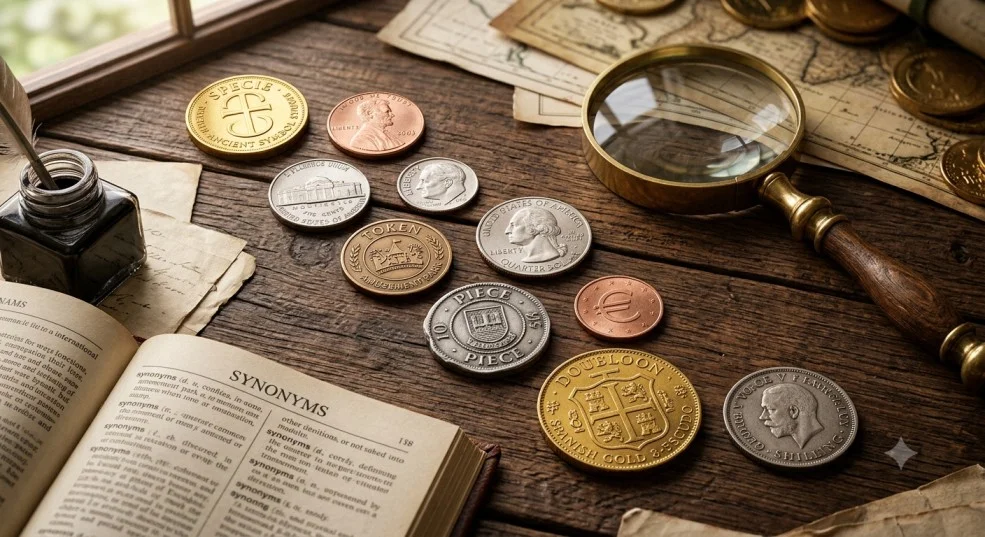
Imagine walking down a busy city street and spotting a shiny gold disc on the ground. You lean forward to pick up the cold, hard metal piece of money, which we call a coin. Coins are small, daily objects that we use to buy treats or save in jars. Because we see them so often, we tend to use the word “coin” over and over again. However, repeating the same word can make your essays, stories, or blog posts feel dull and uninteresting.
Learning fresh synonyms is a fantastic way for English language learners and content writers to spice up their writing and build confidence. This guide will teach you the exact meaning, history, and pronunciation of the word “coin.”
We will also share thirty powerful synonyms, look at how the word is used in different contexts, and study its emotional tones.
Meaning of coin
Definition
- coin (Noun): A flat, round piece of metal that is officially printed by a government to be used as money.
- coin (Verb): To make metal coins, or to invent a new word or phrase.
Examples
- He flipped a shiny silver coin into the air to make his decision.
- Tech experts often coin new terms to describe modern software tools.
Connotative Meaning
- Positive tone: Suggests wealth, luck, history, or a shiny new beginning (e.g., finding a lucky coin or coining a great idea).
- Negative tone: Can feel cheap, cold, or greedy if someone only cares about hoarding spare change.
- Neutral tone: Simply refers to a physical piece of money or the act of stamping metal.
(Connotation is the emotional feeling or secondary idea that a word makes you think of, beyond its literal dictionary definition.)
Etymology
- Origin: The word comes from the Old French word coing, which originally meant “a wedge” or “a stamp”. This French word came from the Latin word cuneus, which also means a wedge. People used wedge-shaped tools to stamp metal disks to make money.
- Old English (450–1100): The word did not exist in English yet. People used words like peneing (penny) or mygnet (mint) instead.
- Middle English (1100–1500): The word entered English as coigne or coyne, meaning a stamp or wedge used in building. By the late 1300s, it slowly changed to mean the actual stamped metal money.
- Modern English (1500–Present): It became spelled as coin. People also started using the verb form “to coin” to describe creating new words and idioms.
Pronunciation
- US: /kɔɪn/
- UK: /kɔɪn/
Syllables
coin (1 syllable)
Affixation Pattern of coin
- Root: coin
- Prefix: None (though words like “uncoined” use the prefix “un-“)
- Suffix: None (though words like “coinage” use the suffix “-age”)
Word Formation:
- Coinage (Noun): The system of coins used in a country, or the invention of a new word.
- Coiner (Noun): A person who makes coins or invents words.
- Coined (Adjective): Newly created or stamped.
- Coining (Verb/Gerund): The act of stamping metal or making up a phrase.
A List of Basics Synonyms of coin
1. Specie (Noun)
- US IPA: /ˈspiːʃi/ | UK IPA: /ˈspiːʃiː/
- Meaning: Money in the form of physical coins rather than paper bills.
- Examples:
- The bank paid out the reward in gold specie.
- Merchants in the old days preferred specie over paper money.
2. Penny (Noun)
- US IPA: /ˈpɛni/ | UK IPA: /ˈpɛni/
- Meaning: A small, copper-colored coin of very low value.
- Examples:
- He found a lucky penny on his way to school.
- The candy costs exactly one penny.
3. Nickel (Noun)
- US IPA: /ˈnɪkəl/ | UK IPA: /ˈnɪkəl/
- Meaning: A five-cent metal coin used in North America.
- Examples:
- She used a nickel to buy a piece of gum.
- The silver nickel slipped through the crack in the wooden floor.
4. Dime (Noun)
- US IPA: /daɪm/ | UK IPA: /daɪm/
- Meaning: A small, thin ten-cent coin.
- Examples:
- A shiny dime is worth ten cents.
- He collected every dime he saved in a small piggy bank.
5. Quarter (Noun)
- US IPA: /ˈkwɔrtər/ | UK IPA: /ˈkwɔːtə/
- Meaning: A twenty-five-cent coin used in the United States and Canada.
- Examples:
- You need a quarter to use the washing machine.
- He flipped a silver quarter to start the football game.
6. Token (Noun)
- US IPA: /ˈtoʊkən/ | UK IPA: /ˈtəʊkən/
- Meaning: A metal disc that looks like a coin but is used for games, rides, or special machines.
- Examples:
- The arcade game requires one brass token to play.
- She traded her paper ticket for a plastic token at the subway entrance.
7. Medal (Noun)
- US IPA: /ˈmɛdəl/ | UK IPA: /ˈmɛdl/
- Meaning: A flat metal disc stamped with a design to honor an achievement.
- Examples:
- The runner won a heavy gold medal.
- He polished his military medal with a soft cloth.
8. Medallion (Noun)
- US IPA: /məˈdæljən/ | UK IPA: /mɪˈdælɪən/
- Meaning: A large, decorative metal disc often worn on a necklace.
- Examples:
- The ancient king wore a heavy gold medallion around his neck.
- She found an old bronze medallion in the garden.
9. Piece (Noun)
- US IPA: /pis/ | UK IPA: /piːs/
- Meaning: A single unit of physical money.
- Examples:
- The pirate carried a heavy gold piece in his pocket.
- This silver piece was minted over one hundred years ago.
10. Cent (Noun)
- US IPA: /sɛnt/ | UK IPA: /sɛnt/
- Meaning: A small coin that is worth one-hundredth of a dollar or a euro.
- Examples:
- She did not have a single cent left in her purse.
- Every cent helps when you are saving for a new bike.
11. Cash (Noun)
- US IPA: /kæʃ/ | UK IPA: /kæʃ/
- Meaning: Money in the form of physical bills or coins.
- Examples:
- The little shop only accepts physical cash.
- He kept some spare cash in his desk drawer.
12. Change (Noun)
- US IPA: /tʃeɪndʒ/ | UK IPA: /tʃeɪndʒ/
- Meaning: A collection of small, metal coins of low value.
- Examples:
- My pockets are heavy because they are full of loose change.
- She gave the cashier her extra change to pay the exact bill.
13. Currency (Noun)
- US IPA: /ˈkɜrənsi/ | UK IPA: /ˈkʌrənsi/
- Meaning: The system of money used in a particular country.
- Examples:
- The euro is the official currency of many European countries.
- He exchanged his local currency for dollars at the airport.
14. Gold (Noun)
- US IPA: /ɡoʊld/ | UK IPA: /ɡəʊld/
- Meaning: A precious yellow metal often used to make rare, valuable coins.
- Examples:
- The treasure chest was full of pure gold.
- They traded their goods for heavy gold coins.
15. Silver (Noun)
- US IPA: /ˈsɪlvər/ | UK IPA: /ˈsɪlvə/
- Meaning: A shiny white precious metal used to make everyday coins.
- Examples:
- Ancient Rome used silver to pay its soldiers.
- The keys jangled against the silver coins in his pocket.
16. Bullion (Noun)
- US IPA: /ˈbʊljən/ | UK IPA: /ˈbʊlɪən/
- Meaning: Gold or silver in bulk form, such as heavy bars or raw coins.
- Examples:
- The bank keeps tons of gold bullion in a secure vault.
- Investors buy silver bullion to protect their wealth.
17. Lucre (Noun)
- US IPA: /ˈlukər/ | UK IPA: /ˈluːkə/
- Meaning: Money, especially when earned in an dishonest or greedy way.
- Examples:
- He was only interested in gaining quick lucre.
- The villain filled his chest with ill-gotten lucre.
18. Dough (Noun)
- US IPA: /doʊ/ | UK IPA: /dəʊ/
- Meaning: A fun slang word for money.
- Examples:
- He needed to earn some quick dough to pay for his car.
- I spent all my dough on concert tickets last night.
19. Moola (Noun)
- US IPA: /ˈmulə/ | UK IPA: /ˈmuːlə/
- Meaning: An informal slang word for cash.
- Examples:
- She saved up enough moola to go on vacation.
- Where did you get all that extra moola?
20. Loot (Noun)
- US IPA: /lut/ | UK IPA: /luːt/
- Meaning: Stolen money, treasures, or coins.
- Examples:
- The pirates hid their shiny loot on a desert island.
- Thieves escaped into the dark night with the museum’s gold loot.
21. Doubloon (Noun)
- US IPA: /dʌˈblun/ | UK IPA: /dʌˈbluːn/
- Meaning: An old Spanish gold coin used in past centuries.
- Examples:
- The diver found a real gold doubloon in the shipwreck.
- He carried a single doubloon as a lucky charm.
22. Shilling (Noun)
- US IPA: /ˈʃɪlɪŋ/ | UK IPA: /ˈʃɪlɪŋ/
- Meaning: An old British silver coin of low value.
- Examples:
- The historical novel mentioned a poor boy earning a shilling.
- Grandfather kept an old silver shilling in his desk.
23. Sovereign (Noun)
- US IPA: /ˈsɑvrən/ | UK IPA: /ˈsɒvrɪn/
- Meaning: A historic British gold coin worth one pound.
- Examples:
- The royal treasury was packed with gold sovereign coins.
- She inherited a rare sovereign from her grandmother.
24. Groat (Noun)
- US IPA: /ɡroʊt/ | UK IPA: /ɡrəʊt/
- Meaning: A very old English silver coin worth four pennies.
- Examples:
- The medieval merchant paid a single groat for his bread.
- Collectors search for the rare silver groat online.
25. Slug (Noun)
- US IPA: /slʌɡ/ | UK IPA: /slʌɡ/
- Meaning: A fake metal piece used to trick a coin machine.
- Examples:
- He tried to use a metal slug in the vending machine.
- The parking meter rejected the cheap lead slug.
26. Invent (Verb)
- US IPA: /ɪnˈvɛnt/ | UK IPA: /ɪnˈvɛnt/
- Meaning: To create, design, or plan something brand new.
- Examples:
- Scientists want to invent a clean fuel for cars.
- It is hard to invent a word that everyone will use.
27. Create (Verb)
- US IPA: /kriˈeɪt/ | UK IPA: /kriːˈeɪt/
- Meaning: To bring something completely new into existence.
- Examples:
- Writers love to create new worlds in fantasy books.
- The artist used clay to create a beautiful bowl.
28. Devise (Verb)
- US IPA: /dɪˈvaɪz/ | UK IPA: /dɪˈvaɪz/
- Meaning: To plan, invent, or work out a complex idea.
- Examples:
- The coach helped us devise a winning strategy.
- We need to devise a safe way to cross the river.
29. Formulate (Verb)
- US IPA: /ˈfɔrmjəˌleɪt/ | UK IPA: /ˈfɔːmjʊleɪt/
- Meaning: To develop a clear plan, rule, or combination of words.
- Examples:
- The chemist worked hard to formulate the new medicine.
- You must formulate your arguments clearly in your essay.
30. Mint (Verb)
- US IPA: /mɪnt/ | UK IPA: /mɪnt/
- Meaning: To stamp, print, and make metal money officially.
- Examples:
- The national government will mint new silver coins this year.
- The king ordered his workers to mint gold coins with his face on them.
Prototype Meaning
The most typical meaning of the word coin is a small, round, silver or gold piece of metal that sits in your wallet or pocket. When people hear this word, they immediately picture physical pocket change, a piggy bank, or a vending machine slot. They imagine the metallic smell and the jingling sound of coins bumping together.
Prototype Categorization
We can group our thirty synonyms into clear buckets to make them easy to use:
- Daily US Currency: Penny, Nickel, Dime, Quarter, Cent.
- General Money Terms: Specie, Cash, Change, Currency.
- Historical or Rare Coins: Doubloon, Shilling, Sovereign, Groat, Piece.
- Precious Metals: Gold, Silver, Bullion.
- Slang or Informal Terms: Dough, Moola, Loot, Lucre.
- Non-Money Metal Discs: Token, Medal, Medallion, Slug.
- Action Verbs (to coin something): Invent, Create, Devise, Formulate, Mint.
Categorization helps writers choose the perfect synonym for their specific scenario. For example, use doubloon for a pirate story, token for a subway ride, and specie for a formal essay about economics.
Antonyms of coin
- Bill (Noun): A flat piece of paper money (e.g., a five-dollar bill).
- Card (Noun): A plastic card used to pay electronically (e.g., a credit card).
- Copy (Verb): To make an exact duplicate of an existing thing instead of creating a new one.
- Destroy (Verb): To ruin or tear down an object or idea instead of making it.
Short Questions and Answers
- What does coin mean?
- A coin is a small, round, flat piece of metal issued by a government to be used as money. It can also be a verb that means to make coins or to invent a new phrase.
- When should coin be used?
- Use it when you are talking about physical pocket money, vending machines, historical treasures, or when someone invents a new word.
- Is coin positive or negative?
- It is mostly neutral. However, it can sound positive when talking about wealth and gold, or slightly negative when referring to cheapness or greed.
- How is it different from similar words?
- Unlike “cash” or “money,” which can mean paper bills or digital numbers, a “coin” is always a physical, hard piece of metal.
Conclusion
Learning the word coin and its thirty excellent synonyms is a great step toward improving your English. Using a variety of words keeps your writing lively and saves you from repeating yourself. This practice makes your stories, essays, and articles far more engaging for your readers. By exploring different word categories, etymology, and pronunciations, you build deep vocabulary confidence. Try using a new synonym like specie, doubloon, or mint in your next writing piece!

I am a linguist with 7 years of experience in English language teaching, including postgraduate-level instruction. My expertise includes English grammar, and I contribute as a content and blog writer, producing scholarly and educational language resources.