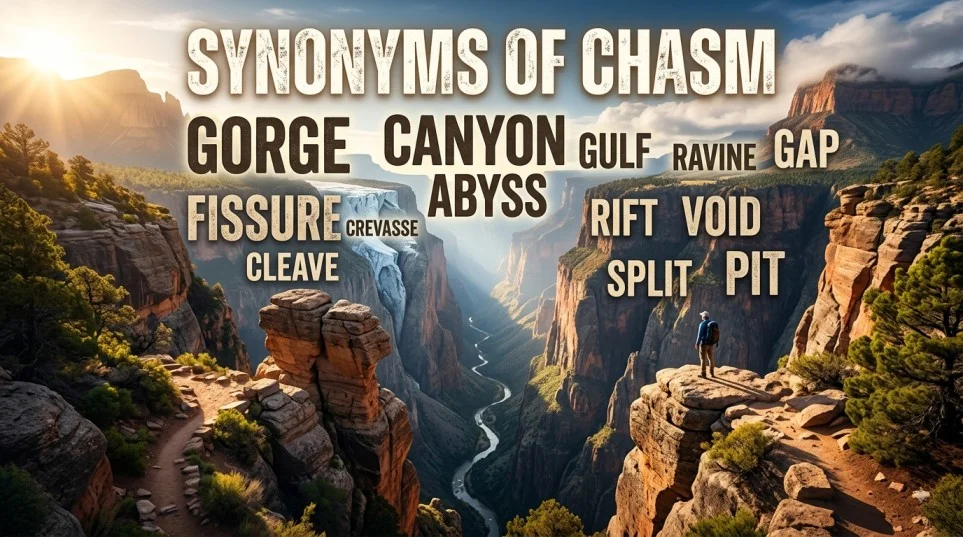
Imagine standing at the edge of a mountain trail. Below you, the ground drops away into a deep, wide gap. That huge opening in the earth is called a “chasm.” People also use this word to describe a big difference between two people, ideas, or groups. This is why the word “chasm” appears often in travel writing, news, and everyday talk.
Learning synonyms of chasm helps English learners and content writers describe deep gaps and big differences without repeating the same word again and again. This article will teach you the meaning of chasm, along with its grammar, history, pronunciation, and word categories.
You will also learn 30 useful synonyms of chasm, each with clear examples to help you use them the right way.
Meaning of Chasm
Definition
Chasm (Noun): A chasm is a deep, wide opening or gap in the ground. It can also mean a big difference between people, ideas, or groups.
Examples
- The hikers stopped at the edge of the deep chasm.
- There is a huge chasm between his beliefs and mine.
Connotative Meaning
Connotation is the feeling a word gives beyond its plain dictionary meaning (connotation means the emotional or cultural feeling attached to a word, not just its basic definition).
- Positive tone: A chasm can sound exciting, as in a bold and adventurous natural wonder.
- Negative tone: It can also feel scary, distant, or hopeless, especially when describing broken relationships.
- Neutral tone: In science or geography, it is simply a plain word for a deep gap in the land.
Etymology
- The word “chasm” comes from the Greek word “khasma,” meaning a yawning gap or opening.
- It passed through Latin as “chasma” before entering English.
- The original idea was of the earth “gaping” or opening wide.
Short History
- Old English (450–1100): The word did not yet exist in English. Old English used native words like “clough” or “gap” for deep openings.
- Middle English (1100–1500): Latin and Greek scholarly words slowly began entering English through science and religious texts.
- Modern English (1500–Present): “Chasm” entered English in the 1500s and became common in both literal and figurative use.
Pronunciation (US & UK – IPA)
US: /ˈkæz.əm/ UK: /ˈkæz.əm/
Syllables
chasm
Affixation Pattern of Chasm
- Root: chasm
- Prefix: none
- Suffix: none (base word)
Word formation from “chasm”:
- chasm (noun) — a deep gap or big difference
- chasmic (adjective, rare) — relating to a chasm
- chasm-like (adjective) — resembling a chasm in shape or size
A List of Wonderful Synonyms of Chasm
Below are 30 strong synonyms of chasm. Each one includes pronunciation, a simple meaning, and example sentences. Practicing these synonyms of chasm will help you describe deep gaps and big differences in many different ways.
1. Abyss (Noun)
US: /əˈbɪs/ | UK: /əˈbɪs/ Meaning: A very deep, bottomless hole or gap. Examples:
- The ship sank into the dark abyss of the ocean.
- Fear pulled him toward an emotional abyss.
2. Gorge (Noun)
US: /ɡɔːrdʒ/ | UK: /ɡɔːdʒ/ Meaning: A deep, narrow valley with steep rocky sides. Examples:
- The river cut through the stone gorge over time.
- Tourists took photos at the edge of the gorge.
3. Canyon (Noun)
US: /ˈkæn.jən/ | UK: /ˈkæn.jən/ Meaning: A large, deep valley with steep sides, often made by a river. Examples:
- The Grand Canyon is famous around the world.
- They hiked down into the wide desert canyon.
4. Ravine (Noun)
US: /rəˈviːn/ | UK: /rəˈviːn/ Meaning: A small, deep, narrow valley cut by running water. Examples:
- The car nearly slid into the ravine.
- A wooden bridge crossed the narrow ravine.
5. Gulf (Noun)
US: /ɡʌlf/ | UK: /ɡʌlf/ Meaning: A wide gap or a large difference between two things. Examples:
- A wide gulf separates the two political parties.
- There is a gulf between what he says and what he does.
6. Crevasse (Noun)
US: /krəˈvæs/ | UK: /krɪˈvæs/ Meaning: A deep, open crack, often found in ice or glaciers. Examples:
- The climber nearly fell into a hidden crevasse.
- Deep crevasses made the glacier dangerous to cross.
7. Fissure (Noun)
US: /ˈfɪʃ.ɚ/ | UK: /ˈfɪʃ.ə/ Meaning: A narrow crack or opening in rock or ground. Examples:
- Hot steam rose from a fissure in the volcano.
- A long fissure ran across the dry desert floor.
8. Rift (Noun)
US: /rɪft/ | UK: /rɪft/ Meaning: A deep crack, or a serious break in a relationship. Examples:
- The earthquake created a large rift in the ground.
- A rift grew between the two old friends.
9. Gap (Noun)
US: /ɡæp/ | UK: /ɡæp/ Meaning: An open space or break between two things. Examples:
- He jumped across the narrow gap in the fence.
- There is a big gap in their income levels.
10. Void (Noun)
US: /vɔɪd/ | UK: /vɔɪd/ Meaning: A completely empty space or deep emptiness. Examples:
- Her death left a void in the family.
- The astronaut floated in the silent void of space.
11. Cleft (Noun)
US: /kleft/ | UK: /kleft/ Meaning: A narrow opening made by splitting something apart. Examples:
- Water dripped through the cleft in the rock.
- A small plant grew from the cleft in the wall.
12. Crack (Noun)
US: /kræk/ | UK: /kræk/ Meaning: A thin, narrow break or line in a surface. Examples:
- A deep crack ran across the frozen lake.
- Light entered the room through a crack in the wall.
13. Pit (Noun)
US: /pɪt/ | UK: /pɪt/ Meaning: A large deep hole in the ground. Examples:
- Workers dug a deep pit for the foundation.
- The animal fell into a hidden pit.
14. Hollow (Noun)
US: /ˈhɑː.loʊ/ | UK: /ˈhɒl.əʊ/ Meaning: A low, empty space or dip in the land. Examples:
- Fog gathered in the hollow between the hills.
- The fox hid inside a hollow in the tree trunk.
15. Breach (Noun)
US: /briːtʃ/ | UK: /briːtʃ/ Meaning: A gap made by breaking through something, or a serious split. Examples:
- Soldiers rushed through the breach in the wall.
- The scandal caused a breach in their friendship.
16. Divide (Noun)
US: /dɪˈvaɪd/ | UK: /dɪˈvaɪd/ Meaning: A clear separation or difference between two groups. Examples:
- There is a growing divide between rich and poor.
- A deep divide split the two nations apart.
17. Split (Noun)
US: /splɪt/ | UK: /splɪt/ Meaning: A break or separation between parts. Examples:
- The split in the team caused a new group to form.
- A split appeared in the ice under his feet.
18. Gully (Noun)
US: /ˈɡʌl.i/ | UK: /ˈɡʌl.i/ Meaning: A small valley or channel cut by flowing water. Examples:
- Rainwater carved a gully through the hillside.
- The dog ran along the dry gully.
19. Trench (Noun)
US: /trentʃ/ | UK: /trentʃ/ Meaning: A long, narrow, deep ditch or channel. Examples:
- Soldiers dug trenches during the war.
- The ocean trench is deeper than any mountain is tall.
20. Precipice (Noun)
US: /ˈpres.ə.pɪs/ | UK: /ˈpres.ɪ.pɪs/ Meaning: A very steep cliff edge, often near a deep drop. Examples:
- The goat stood calmly on the edge of the precipice.
- One wrong step could send him off the precipice.
21. Cavity (Noun)
US: /ˈkæv.ə.ti/ | UK: /ˈkæv.ɪ.ti/ Meaning: A hollow space or hole inside something. Examples:
- The dentist found a small cavity in his tooth.
- Bats live inside the dark cavity of the cave.
22. Hole (Noun)
US: /hoʊl/ | UK: /həʊl/ Meaning: An empty opening or gap in a surface. Examples:
- The dog dug a deep hole in the yard.
- A hole in the roof let the rain in.
23. Schism (Noun)
US: /ˈsɪz.əm/ | UK: /ˈsɪz.əm/ Meaning: A deep split between people, often over beliefs. Examples:
- The disagreement caused a schism within the church.
- A schism formed between the two political groups.
24. Gulch (Noun)
US: /ɡʌltʃ/ | UK: /ɡʌltʃ/ Meaning: A deep, narrow ditch cut by fast-moving water. Examples:
- The old mining town sat beside a rocky gulch.
- Flood water rushed quickly through the gulch.
25. Sinkhole (Noun)
US: /ˈsɪŋk.hoʊl/ | UK: /ˈsɪŋk.həʊl/ Meaning: A hole that suddenly forms when the ground collapses. Examples:
- A sinkhole opened up in the middle of the road.
- The city closed the street because of the sinkhole.
26. Opening (Noun)
US: /ˈoʊ.pən.ɪŋ/ | UK: /ˈəʊ.pən.ɪŋ/ Meaning: A gap or space that allows entry or passage. Examples:
- Light poured through the opening in the cave.
- The climber squeezed through a narrow opening.
27. Disconnect (Noun)
US: /ˈdɪs.kə.nekt/ | UK: /ˈdɪs.kə.nekt/ Meaning: A lack of connection or understanding between people. Examples:
- There is a clear disconnect between the manager and the team.
- The disconnect between them grew over the years.
28. Separation (Noun)
US: /ˌsep.əˈreɪ.ʃən/ | UK: /ˌsep.əˈreɪ.ʃən/ Meaning: A space or distance that keeps two things apart. Examples:
- A long separation kept the old friends apart.
- The wall created a clear separation between the rooms.
29. Depth (Noun)
US: /depθ/ | UK: /depθ/ Meaning: The distance from top to bottom of a deep space. Examples:
- The depth of the canyon amazed every visitor.
- Scientists measured the depth of the ocean trench.
30. Crater (Noun)
US: /ˈkreɪ.tɚ/ | UK: /ˈkreɪ.tə/ Meaning: A large, bowl-shaped hollow made by an impact or explosion. Examples:
- The meteor left a huge crater in the desert.
- The volcano’s crater still releases smoke today.
Prototype Meaning
When most people hear the word “chasm,” they picture a deep, wide gap in the earth, like a canyon or a giant crack in a mountain. They imagine looking down and seeing nothing but empty space. Many people also connect the word to a strong emotional or social gap, such as a big difference in beliefs between two people. This dual meaning, both physical and emotional, is the most typical image the word brings to mind.
Prototype Categorization
Grouping the synonyms of chasm into categories helps writers choose the right word for each situation.
- Natural landforms: canyon, gorge, ravine, gully, gulch, crater
- Deep or dangerous gaps: abyss, pit, crevasse, precipice, sinkhole, trench
- Cracks and narrow breaks: fissure, crack, cleft, rift, hole, cavity
- Figurative or emotional gaps: gulf, divide, disconnect, schism, separation, breach
- General or descriptive words: gap, void, opening, split, depth, hollow
Understanding these categories makes it easier to pick the best synonyms of chasm for travel writing, science texts, or stories about human relationships. A geography article may use “canyon” or “gorge,” while a story about broken trust may use “rift” or “schism.”
Antonyms of Chasm
- Bridge (Noun): something that connects two separated things.
- Connection (Noun): a link or bond between people or things.
- Closeness (Noun): a state of being near or emotionally close.
- Unity (Noun): the state of being joined as one.
- Bond (Noun): a strong link that joins two things together.
Short Questions and Answers
- What does chasm mean? Chasm means a deep, wide gap in the ground, or a big difference between people or ideas.
- When should chasm be used? Use it to describe a deep physical gap in land, or a serious emotional or social divide.
- Is chasm positive or negative? It is usually neutral or negative, since it often points to distance, danger, or disagreement.
- How is it different from similar words? Chasm often suggests great depth and difficulty crossing, while words like “gap” or “crack” can be much smaller and less dramatic.
Conclusion
Learning the word “chasm” and its synonyms improves your vocabulary and helps you describe deep gaps and big differences with more skill. Using different synonyms of chasm also strengthens your writing and speaking, since it helps you avoid repeating the same word too often. This variety makes your English sound natural and confident. Whether you are writing about mountains, oceans, or human relationships, knowing many synonyms of chasm gives you the right word for every situation. Practice using a new synonym of chasm each day, and over time, your vocabulary will grow strong and wide, just like the word itself.

I am a linguist with 7 years of experience in English language teaching, including postgraduate-level instruction. My expertise includes English grammar, and I contribute as a content and blog writer, producing scholarly and educational language resources.