Meet Sara. She works in sales. One day, a client tried to trick her with a confusing offer. Sara saw through it in seconds. She asked the right questions and got a fair deal. Her boss smiled and said, “You are so astute.”
This word means having sharp judgment and quick understanding. People use it often to describe smart decisions, clever thinking, and good instincts in business, school, and daily life. If you want to sound confident and avoid repeating the same words, you need new options. Learning the synonyms of astute helps
English learners and content writers build a richer vocabulary and write with more variety. This article explores the meaning of astute, its history, pronunciation, grammar, and 30 useful synonyms, each with simple examples you can use right away.
Meaning of Astute
Definition
Astute (Adjective): Astute means having a sharp mind and good judgment. It describes someone who notices small details and makes smart choices.
Examples
- The astute investor sold his stocks before the price dropped.
- Her astute observation helped the team solve the problem quickly.
Connotative Meaning
Astute carries an emotional tone depending on how it is used.
- Positive tone: Shows respect for someone’s intelligence and good judgment.
- Negative tone: Can suggest a person is sly or calculating in a self-serving way.
- Neutral tone: Simply describes sharp thinking without extra emotion.
(Connotation means the feeling or idea a word suggests, beyond its plain dictionary meaning.)
Etymology
- Astute comes from the Latin word astutus, meaning “crafty” or “skillful.”
- It is related to astus, a Latin word for “craft” or “skill.”
- The word entered English through French influence during the Renaissance period.
Short History
- Old English (450–1100): The word astute did not exist yet. English speakers used native words like wis (wise) instead.
- Middle English (1100–1500): Latin and French words began entering English through trade, law, and church use, setting the stage for words like astute.
- Modern English (1500–Present): Astute entered English in the early 1600s and became common in writing about intelligence, strategy, and business.
Pronunciation (US & UK – IPA)
- US: /əˈstuːt/
- UK: /əˈstjuːt/
Syllables
as-tute (2 syllables)
Affixation Pattern of Astute
- Root: astut- (from Latin astutus)
- Prefix: none
- Suffix: none (astute is a base adjective form)
Word Formation
- Astute (adjective) — the base word
- Astutely (adverb) — describes an action done with sharp judgment
- Astuteness (noun) — the quality of being astute
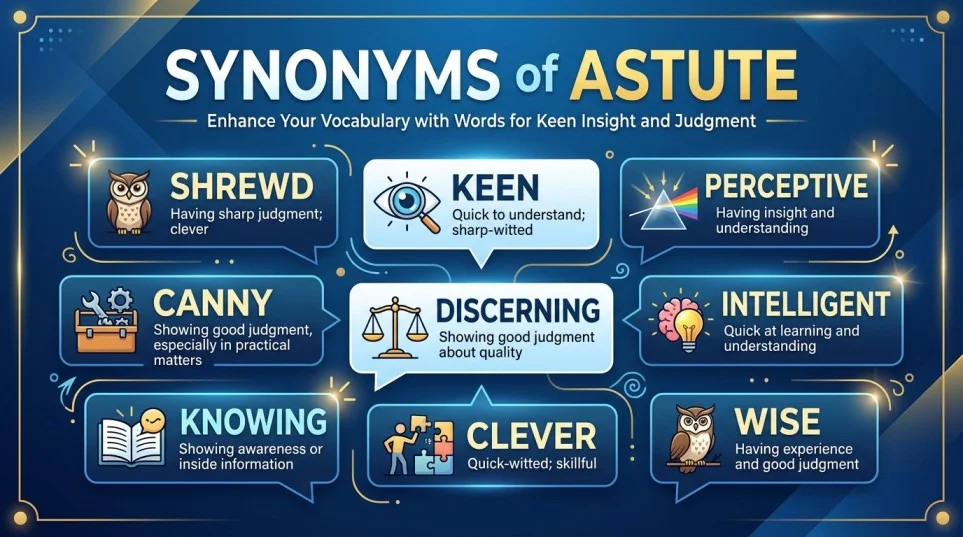
A List of Wonderful Synonyms of Astute
Below are 30 synonyms of astute. Each one includes pronunciation, meaning, and examples so you can use it naturally in your own writing.
1. Shrewd (Adjective)
US /ʃruːd/ | UK /ʃruːd/ Meaning: Having sharp practical judgment, especially about people or money.
- The shrewd manager cut costs without losing quality.
- She made a shrewd decision to invest early.
2. Sharp (Adjective)
US /ʃɑːrp/ | UK /ʃɑːp/ Meaning: Quick to notice or understand things.
- He has a sharp mind for numbers.
- The sharp student caught the error instantly.
3. Perceptive (Adjective)
US /pərˈsɛptɪv/ | UK /pəˈsɛptɪv/ Meaning: Able to notice and understand things others miss.
- Her perceptive comments improved the report.
- The perceptive teacher noticed the quiet student’s talent.
4. Clever (Adjective)
US /ˈklɛvər/ | UK /ˈklɛvə/ Meaning: Quick to learn, understand, or solve problems.
- The clever fox found a way past the fence.
- That was a clever solution to a hard problem.
5. Insightful (Adjective)
US /ˈɪnsaɪtfəl/ | UK /ˈɪnsaɪtfʊl/ Meaning: Showing deep and clear understanding of a situation.
- His insightful analysis changed our strategy.
- She gave an insightful answer during the interview.
6. Sagacious (Adjective)
US /səˈɡeɪʃəs/ | UK /səˈɡeɪʃəs/ Meaning: Showing wisdom and good judgment, especially in difficult matters.
- The sagacious leader avoided a costly mistake.
- Her sagacious advice saved the company money.
7. Discerning (Adjective)
US /dɪˈsɜːrnɪŋ/ | UK /dɪˈsɜːnɪŋ/ Meaning: Able to judge quality or truth clearly.
- A discerning buyer checks every detail.
- The discerning editor spotted the weak plot point.
8. Keen (Adjective)
US /kiːn/ | UK /kiːn/ Meaning: Having a strong and sharp ability to understand or notice.
- She has a keen eye for design.
- His keen sense of timing made the joke funny.
9. Canny (Adjective)
US /ˈkæni/ | UK /ˈkæni/ Meaning: Smart and careful, especially in practical or money matters.
- The canny trader avoided the market crash.
- He is canny enough to spot a bad deal.
10. Wise (Adjective)
US /waɪz/ | UK /waɪz/ Meaning: Having good judgment based on knowledge and experience.
- The wise elder gave calm advice.
- It was wise to save money early.
11. Savvy (Adjective)
US /ˈsævi/ | UK /ˈsævi/ Meaning: Having practical knowledge and good judgment, especially in business or technology.
- The savvy marketer used social media well.
- She is tech-savvy and fixes issues fast.
12. Intelligent (Adjective)
US /ɪnˈtɛlɪdʒənt/ | UK /ɪnˈtɛlɪdʒənt/ Meaning: Having a strong ability to learn, think, and understand.
- The intelligent student finished the test early.
- His intelligent questions impressed the panel.
13. Perspicacious (Adjective)
US /ˌpɜːrspɪˈkeɪʃəs/ | UK /ˌpɜːspɪˈkeɪʃəs/ Meaning: Having a very sharp understanding of complex ideas or people.
- The perspicacious lawyer saw the hidden flaw in the contract.
- Her perspicacious remarks surprised the panel.
14. Judicious (Adjective)
US /dʒuˈdɪʃəs/ | UK /dʒuːˈdɪʃəs/ Meaning: Showing careful, sensible judgment.
- He made a judicious choice under pressure.
- Judicious planning helped the project succeed.
15. Smart (Adjective)
US /smɑːrt/ | UK /smɑːt/ Meaning: Able to think and learn quickly and clearly.
- She gave a smart answer to a tough question.
- That was a smart move in the game.
16. Quick-witted (Adjective)
US /ˈkwɪkˌwɪtɪd/ | UK /ˈkwɪkˌwɪtɪd/ Meaning: Able to think and respond fast in tricky situations.
- The quick-witted host handled the awkward moment well.
- His quick-witted reply made everyone laugh.
17. Sensible (Adjective)
US /ˈsɛnsəbəl/ | UK /ˈsɛnsəbl/ Meaning: Showing good, practical judgment.
- It is sensible to save for emergencies.
- She made a sensible plan before the trip.
18. Prudent (Adjective)
US /ˈpruːdənt/ | UK /ˈpruːdənt/ Meaning: Careful and wise when making decisions, especially about risk.
- A prudent driver checks the mirrors often.
- Prudent spending kept the family debt-free.
19. Observant (Adjective)
US /əbˈzɜːrvənt/ | UK /əbˈzɜːvənt/ Meaning: Quick to notice things around you.
- The observant guard noticed the open door.
- She is observant and remembers small details.
20. Calculating (Adjective)
US /ˈkælkjəleɪtɪŋ/ | UK /ˈkælkjʊleɪtɪŋ/ Meaning: Planning carefully, sometimes in a selfish or cold way.
- The calculating businessman planned every move.
- His calculating nature made others uneasy.
21. Cunning (Adjective)
US /ˈkʌnɪŋ/ | UK /ˈkʌnɪŋ/ Meaning: Skilled at tricking or outsmarting others.
- The cunning thief avoided every camera.
- Her cunning plan fooled the guards.
22. Crafty (Adjective)
US /ˈkræfti/ | UK /ˈkrɑːfti/ Meaning: Clever in a sneaky or tricky way.
- The crafty seller hid the product’s flaws.
- He used a crafty trick to win the game.
23. Sly (Adjective)
US /slaɪ/ | UK /slaɪ/ Meaning: Clever in a secretive or dishonest way.
- The sly cat crept past the dog.
- She gave a sly smile before the surprise.
24. Foxy (Adjective)
US /ˈfɒksi/ | UK /ˈfɒksi/ Meaning: Clever and tricky, like a fox.
- The foxy negotiator got a better price.
- His foxy tactics confused the other team.
25. Sharp-witted (Adjective)
US /ˈʃɑːrpˌwɪtɪd/ | UK /ˈʃɑːpˌwɪtɪd/ Meaning: Able to think and react in a very smart, fast way.
- The sharp-witted lawyer won the case.
- Her sharp-witted comeback ended the debate.
26. Wily (Adjective)
US /ˈwaɪli/ | UK /ˈwaɪli/ Meaning: Clever at tricking or outsmarting people.
- The wily politician avoided the tough question.
- A wily fox escaped the trap twice.
27. Rational (Adjective)
US /ˈræʃənəl/ | UK /ˈræʃənl/ Meaning: Based on clear thinking and logic rather than emotion.
- She stayed rational during the crisis.
- His rational approach solved the dispute fast.
28. Sage (Adjective)
US /seɪdʒ/ | UK /seɪdʒ/ Meaning: Wise, especially from long experience.
- The sage advice came from her grandmother.
- His sage words guided the young team.
29. Alert (Adjective)
US /əˈlɜːrt/ | UK /əˈlɜːt/ Meaning: Watchful and quick to notice danger or change.
- The alert driver avoided the accident.
- Stay alert during the night shift.
30. Vigilant (Adjective)
US /ˈvɪdʒələnt/ | UK /ˈvɪdʒɪlənt/ Meaning: Staying watchful and careful to avoid problems.
- The vigilant nurse checked on every patient.
- Be vigilant when sharing personal information online.
Prototype Meaning
When people hear the word astute, they usually picture someone calm and sharp, a person who reads a situation quickly and makes the right call. This could be a smart businessperson, a wise teacher, or a clever friend who always seems to know what to do next. The prototype image is someone who thinks fast, sees details others miss, and rarely gets fooled.
Prototype Categorization
The synonyms of astute fall into a few clear groups. Sorting them this way makes word choice much easier.
- Sharp thinkers: sharp, keen, perceptive, insightful, quick-witted, sharp-witted
- Wise and experienced: wise, sagacious, sage, judicious, prudent
- Practical and business-smart: shrewd, canny, savvy, sensible, rational
- Watchful types: observant, alert, vigilant, discerning
- Tricky or sly (negative shade): cunning, crafty, sly, foxy, wily, calculating
- General intelligence: intelligent, smart
Grouping the synonyms of astute like this helps writers pick the exact word that fits their tone, whether they want a positive, neutral, or slightly negative feeling in their sentence.
Antonyms of Astute
- Foolish (Adjective): Lacking good sense or judgment.
- Naive (Adjective): Too trusting or lacking experience to judge well.
- Ignorant (Adjective): Lacking knowledge or awareness of facts.
- Dull (Adjective): Slow to understand or notice things.
- Careless (Adjective): Not paying enough attention to details or risks.
Short Questions and Answers
- What does astute mean? Astute means having sharp judgment and quick understanding of people or situations.
- When should astute be used? Use astute when describing someone who makes smart, well-informed decisions, especially in business, strategy, or problem-solving.
- Is astute positive or negative? Astute is usually positive. It shows respect for someone’s intelligence, though it can sound slightly negative if it suggests a person is being calculating.
- How is it different from similar words? Astute focuses on sharp, practical judgment. Words likewise focus more on experience, while cunning and sly lean toward trickery rather than honest skill.
Conclusion
Learning astute and its many synonyms gives you real power in English. It improves your vocabulary and helps you describe smart, sharp people in fresh, interesting ways. Knowing the synonyms of astute also strengthens your writing and speaking, since you can match the right word to the right tone, whether positive, neutral, or sly. It helps you avoid repeating the same word again and again, which makes your writing sound more natural and professional. Most importantly, this kind of practice builds real confidence in English. Try using a new synonym of astute every day. Small steps like this add up fast, and soon these words will feel like a natural part of how you speak and write.

I am a linguist with 7 years of experience in English language teaching, including postgraduate-level instruction. My expertise includes English grammar, and I contribute as a content and blog writer, producing scholarly and educational language resources.