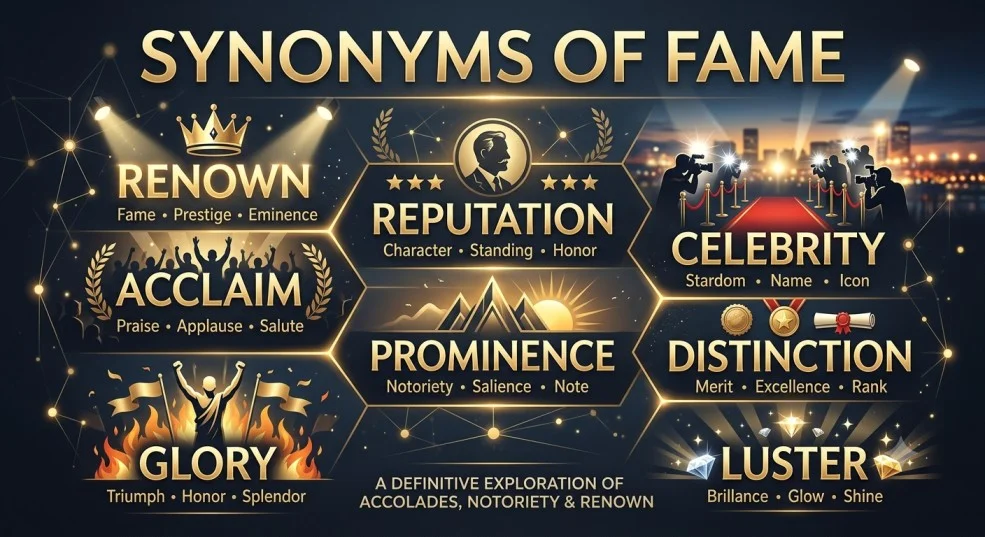
Fame means being known by many people. Imagine a young singer who posts one song online. In a week, millions watch her video. Reporters call her. Strangers know her name. This is fame. People use this word often because everyone understands what it feels like to be noticed, admired, or talked about.
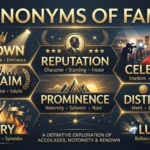
Learning synonyms of fame helps English learners and content writers avoid using the same word again and again. It also makes writing sound richer and more natural. This article will explore the meaning of fame, its history, pronunciation, and grammar.
You will also learn 30 synonyms of fame with clear examples, plus antonyms and common questions. By the end, you will feel confident using fame and its synonyms in daily English.
Meaning of Fame
Definition
Fame (Noun): Fame is the state of being known and talked about by many people, usually because of an achievement, talent, or event.
Examples
- Her fame grew after she won the singing contest.
- The actor enjoyed years of fame in Hollywood.
Connotative Meaning
- Positive tone: Fame often sounds exciting and impressive, like success and admiration.
- Negative tone: Fame can also suggest pressure, loss of privacy, or short-lived attention.
- Neutral tone: In news or history writing, fame simply means “well known,” without strong feeling.
(Connotation means the feeling or idea a word gives, beyond its basic dictionary meaning.)
Etymology
- Fame comes from the Old French word fame, which came from the Latin word fama, meaning “rumor, report, or reputation.”
- The Latin fama is related to fari, meaning “to speak.” So fame originally meant “what people speak about you.”
Short History
- Old English (450–1100): English did not use “fame” yet. Instead, words like hlisa (meaning report or reputation) were used for similar ideas.
- Middle English (1100–1500): The word “fame” entered English through French and Latin influence after the Norman Conquest. It meant reputation, good or bad.
- Modern English (1500–Present): Fame narrowed to mean widespread public recognition, usually positive, especially in media, entertainment, and achievement.
Pronunciation (US & UK – IPA)
- US: /feɪm/
- UK: /feɪm/
Syllables
fame (one syllable)
Affixation Pattern of Fame
- Root: fame
- Prefix: none common
- Suffix: -ous (famous), -ed (famed)
Word formation from fame:
- famous (adjective) — very well known
- famed (adjective) — well known, often for a specific quality
- infamous (adjective) — famous for something bad
- fame (noun) — the base word itself
A List of Best Synonyms of Fame
1. Renown (Noun)
US /rɪˈnaʊn/ | UK /rɪˈnaʊn/
Meaning: Renown means being widely known and admired for skill or achievement.
Examples:
- The chef earned renown for his desserts.
- His renown spread across the country.
2. Celebrity (Noun)
US /səˈlɛbrəti/ | UK /səˈlɛbrəti/
Meaning: Celebrity means the state of being famous, often connected to public life or entertainment.
Examples:
- Her celebrity grew after the movie’s release.
- He handled his celebrity with grace.
3. Prominence (Noun)
US /ˈprɑːmɪnəns/ | UK /ˈprɒmɪnəns/
Meaning: Prominence means being important or well known in a certain field.
Examples:
- The scientist gained prominence in medical research.
- Her prominence in politics increased each year.
4. Stardom (Noun)
US /ˈstɑːrdəm/ | UK /ˈstɑːdəm/
Meaning: Stardom means the state of being a famous performer or public figure.
Examples:
- The film brought her instant stardom.
- He dreamed of stardom since childhood.
5. Distinction (Noun)
US /dɪˈstɪŋkʃən/ | UK /dɪˈstɪŋkʃən/
Meaning: Distinction means being noticed and respected for excellence.
Examples:
- She served with distinction in her career.
- His work earned him great distinction.
6. Notoriety (Noun)
US /ˌnoʊtəˈraɪəti/ | UK /ˌnəʊtəˈraɪəti/
Meaning: Notoriety means being widely known, usually for something negative.
Examples:
- The scandal brought him notoriety.
- She gained notoriety for her harsh reviews.
7. Eminence (Noun)
US /ˈɛmɪnəns/ | UK /ˈɛmɪnəns/
Meaning: Eminence means high rank or fame, especially in a profession.
Examples:
- The professor reached eminence in physics.
- His eminence as a lawyer was well known.
8. Reputation (Noun)
US /ˌrɛpjuˈteɪʃən/ | UK /ˌrɛpjʊˈteɪʃən/
Meaning: Reputation means what people generally think or say about someone.
Examples:
- She built a strong reputation as a teacher.
- His reputation for honesty helped his business.
9. Glory (Noun)
US /ˈɡlɔːri/ | UK /ˈɡlɔːri/
Meaning: Glory means great honor or fame won through achievement.
Examples:
- The team celebrated their moment of glory.
- He fought for personal glory in the race.
10. Acclaim (Noun)
US /əˈkleɪm/ | UK /əˈkleɪm/
Meaning: Acclaim means public praise and approval, often after great success.
Examples:
- The novel received wide acclaim.
- Critics gave the film huge acclaim.
11. Repute (Noun)
US /rɪˈpjuːt/ | UK /rɪˈpjuːt/
Meaning: Repute means the way someone is generally regarded by others.
Examples:
- The doctor was of high repute in the city.
- Her repute grew after the discovery.
12. Illustriousness (Noun)
US /ɪˈlʌstriəsnəs/ | UK /ɪˈlʌstriəsnəs/
Meaning: Illustriousness means the quality of being famous and highly respected.
Examples:
- The illustriousness of his career impressed everyone.
- Her family’s illustriousness dates back generations.
13. Popularity (Noun)
US /ˌpɑːpjəˈlærəti/ | UK /ˌpɒpjʊˈlærəti/
Meaning: Popularity means being liked or admired by many people.
Examples:
- The song’s popularity grew fast online.
- His popularity helped him win the election.
14. Prestige (Noun)
US /prɛˈstiːʒ/ | UK /prɛˈstiːʒ/
Meaning: Prestige means the respect and admiration given to someone important.
Examples:
- The award added prestige to the university.
- Working there brought him great prestige.
15. Honor (Noun)
US /ˈɑːnər/ | UK /ˈɒnə/
Meaning: Honor means public respect earned through good actions or achievement.
Examples:
- He received the honor of being named captain.
- Her honor in the community was well known.
16. Recognition (Noun)
US /ˌrɛkəɡˈnɪʃən/ | UK /ˌrɛkəɡˈnɪʃən/
Meaning: Recognition means being noticed and appreciated for one’s work.
Examples:
- The artist finally got the recognition she deserved.
- His hard work earned public recognition.
17. Standing (Noun)
US /ˈstændɪŋ/ | UK /ˈstændɪŋ/
Meaning: Standing means a person’s position or reputation in society.
Examples:
- Her standing in the industry rose quickly.
- He lost his standing after the mistake.
18. Éclat (Noun)
US /eɪˈklɑː/ | UK /eɪˈklɑː/
Meaning: Éclat means brilliant success that brings public admiration.
Examples:
- The show opened with great éclat.
- He completed the project with éclat.
19. Luminary status (Noun Phrase)
US /ˈluːmɪnɛri ˈstætəs/ | UK /ˈluːmɪnəri ˈsteɪtəs/
Meaning: Luminary status means being viewed as a leading, inspiring figure in a field.
Examples:
- He achieved luminary status in modern art.
- Her luminary status inspired young writers.
20. Public esteem (Noun Phrase)
US /ˈpʌblɪk ɪˈstiːm/ | UK /ˈpʌblɪk ɪˈstiːm/
Meaning: Public esteem means the respect and admiration a person receives from society.
Examples:
- The mayor held public esteem for years.
- His charity work increased public esteem.
21. Note (Noun)
US /noʊt/ | UK /nəʊt/
Meaning: Note, in formal use, means fame or importance, as in “a person of note.”
Examples:
- She became a writer of note.
- He is a scientist of great note.
22. Eclipsing fame (Noun Phrase)
US /ɪˈklɪpsɪŋ feɪm/ | UK /ɪˈklɪpsɪŋ feɪm/
Meaning: Eclipsing fame means fame so great it overshadows others in the same field.
Examples:
- His eclipsing fame left rivals unnoticed.
- The band’s eclipsing fame changed the music scene.
23. Wide acclaim (Noun Phrase)
US /waɪd əˈkleɪm/ | UK /waɪd əˈkleɪm/
Meaning: Wide acclaim means strong praise given by many people across a large area.
Examples:
- The book received wide acclaim from critics.
- Her performance won wide acclaim.
24. Household name (Noun Phrase)
US /ˈhaʊshoʊld neɪm/ | UK /ˈhaʊshəʊld neɪm/
Meaning: Household name means someone or something known by almost everyone.
Examples:
- The brand became a household name.
- She turned into a household name after one film.
25. Limelight (Noun)
US /ˈlaɪmlaɪt/ | UK /ˈlaɪmlaɪt/
Meaning: Limelight means the center of public attention.
Examples:
- He enjoyed being in the limelight.
- The scandal put her back in the limelight.
26. Spotlight (Noun)
US /ˈspɑːtlaɪt/ | UK /ˈspɒtlaɪt/
Meaning: Spotlight means intense public focus or attention on someone.
Examples:
- The award put her in the spotlight.
- He avoided the media spotlight.
27. Public recognition (Noun Phrase)
US /ˈpʌblɪk ˌrɛkəɡˈnɪʃən/ | UK /ˈpʌblɪk ˌrɛkəɡˈnɪʃən/
Meaning: Public recognition means being formally noticed or praised by the general public.
Examples:
- The award gave her public recognition.
- His invention brought public recognition.
28. Distinguished reputation (Noun Phrase)
US /dɪˈstɪŋɡwɪʃt ˌrɛpjuˈteɪʃən/ | UK /dɪˈstɪŋɡwɪʃt ˌrɛpjʊˈteɪʃən/
Meaning: Distinguished reputation means a highly respected and well-known standing.
Examples:
- The lawyer built a distinguished reputation.
- Her distinguished reputation opened many doors.
29. Notability (Noun)
US /ˌnoʊtəˈbɪləti/ | UK /ˌnəʊtəˈbɪləti/
Meaning: Notability means the quality of being worth noticing or remembering.
Examples:
- The building gained notability for its design.
- Her notability grew after the award.
30. Renownedness (Noun)
US /rɪˈnaʊndnəs/ | UK /rɪˈnaʊndnəs/
Meaning: Renownedness means the state of being widely and highly known.
Examples:
- The chef’s renownedness spread worldwide.
- His renownedness came from decades of work.
Prototype Meaning
When most people hear the word fame, they picture a celebrity, a famous singer, actor, or athlete recognized by strangers everywhere. They imagine cameras, interviews, and crowds of fans. This is the typical, or prototype, meaning of fame. It centers on wide public recognition tied to talent, success, or a major event.
Prototype Categorization
Understanding synonyms of fame becomes easier when you group them by category. Grouping helps writers pick the right word for the right situation.
- General fame: renown, celebrity, popularity, notability
- Professional or formal fame: eminence, distinction, prestige, standing
- Fame from praise or success: acclaim, wide acclaim, glory, éclat
- Negative fame: notoriety
- Fame tied to attention: limelight, spotlight, household name
- Fame tied to respect: honor, repute, reputation, public esteem
This categorization helps writers choose words that match the exact tone, whether positive, negative, or neutral. Knowing these groups makes the synonyms of fame easier to remember and use correctly in real writing.
Antonyms of Fame
- Obscurity (Noun): the state of being unknown or forgotten.
- Anonymity (Noun): the condition of being nameless or unidentified.
- Insignificance (Noun): the state of having little or no importance.
- Unknownness (Noun): the quality of not being recognized by others.
Short Questions and Answers
- What does fame mean? Fame means being known and recognized by many people.
- When should fame be used? Use fame when talking about public recognition from achievement, talent, or events.
- Is fame positive or negative? Fame is usually positive, but it can turn negative when linked to scandal or unwanted attention.
- How is it different from similar words? Fame is general and common, while words like renown or eminence sound more formal, and notoriety always carries a negative tone.
Conclusion
Learning name and its many synonyms builds a stronger, more flexible vocabulary. It helps writers and speakers avoid repeating the same word and instead choose words that match the right tone and situation. Knowing different synonyms of fame also strengthens both writing and speaking skills, making communication clearer and more interesting. Over time, this practice builds real confidence in English. Try using a few new synonyms of fame in your daily writing or conversation. Small daily practice, even just one new word a day, adds up to lasting vocabulary growth.

I am a linguist with 7 years of experience in English language teaching, including postgraduate-level instruction. My expertise includes English grammar, and I contribute as a content and blog writer, producing scholarly and educational language resources.